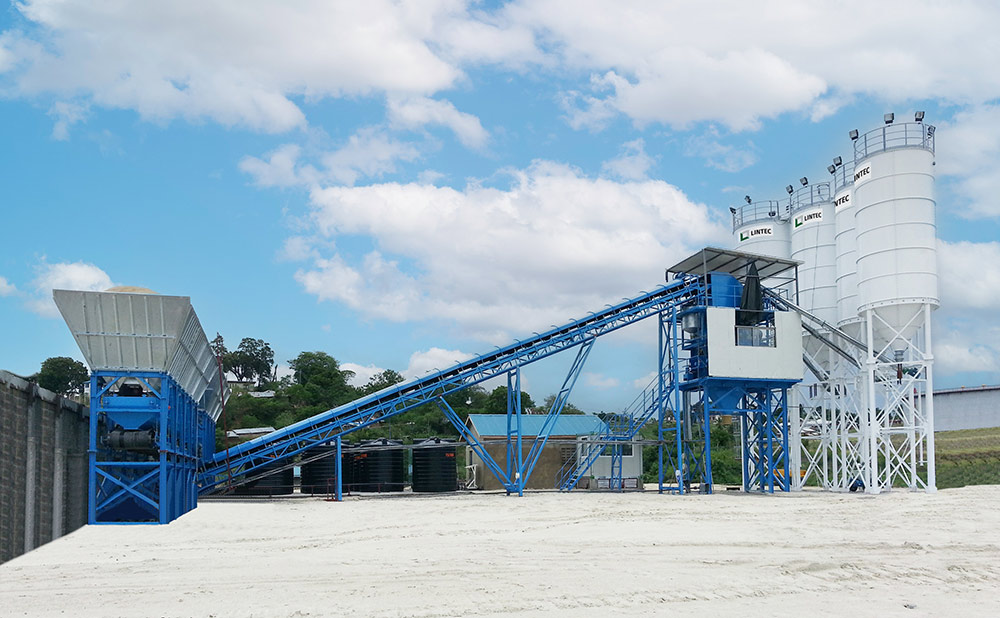
In a fast-paced construction industry, characterised by increasing demand for faster project execution and superior quality, the role of technologically advanced batching systems is becoming more vital than ever. Today’s concrete batching plants are not just about mixing aggregates and cement; they are about precision, data and control to enable the production of consistent, high-quality concrete efficiently and cost-effectively.
Speaking to Quarrying Africa, Tee Peow Aik, Group Chief Operating Officer at Lintec & Linnhoff, says automation and digitalisation, modular compact designs, higher-capacity systems, and a strong emphasis on sustainability, are some of the four major trends shaping the future of concrete batching technology.
“Digitalisation is increasingly built into customer expectations. Plants equipped with Lintec & Linnhoff’s Windows-based ECS control system, offering PLC automation and remote access, are now a standard solution. This system supports full control of the plant’s functions, ensuring consistent production and enabling off-site troubleshooting,” says Peow Aik.
Modularity, he adds, has also gained prominence. The Lintec ECP Eco Concrete Batching Plant and the Lintec CC & CCE Containerised Concrete Batching Plants are prefabricated and mobile, allowing quick installation without foundations, reducing civil works and commissioning time. These attributes are in high demand across markets that require fast deployment and flexibility.
For high-volume infrastructure work, demand is growing for higher-capacity plants. Lintec’s UCP Ultra Concrete Batching Plants offer outputs of up to 250 m³/hour, using twin-shaft mixers and large-capacity bins to deliver performance without compromising quality.
Sustainability is becoming a global standard. Enclosed, cladded plants reduce noise and dust, and meet the strict environmental regulations increasingly enforced in urban zones.
Meeting evolving jobsite needs
In response to these emerging trends, Lintec & Linnhoff’s approach to innovation is grounded in close collaboration with its global customer base. Rather than just following trends, says Peow Aik, the company listens to evolving jobsite needs and channel that feedback directly into its product development, service enhancements and training programmes.
“One key example is our investment in engineering hubs across Asia and Europe, where customer insights from across the globe are used to shape new features,” he says “The launch of the Lintec UCP Ultra Concrete Batching Plants, which offer high hourly output and advanced control logic, reflects growing market demand for faster, more efficient concrete production that can adapt to a wide range of operating environments.”
Lintec & Linnhoff also prioritises long-term support, recognising that access to skilled service personnel and spare parts can be a challenge in some regions. That is why the company has expanded its training programmes and now offers technical onboarding sessions and plant commissioning support, both in-person and virtually. This ensures local teams are empowered to operate and maintain their plants efficiently, maximising uptime and return on investment (ROI).
“In response to growing digitalisation, we have built remote diagnostic tools and real-time monitoring into our ECS control platform. This is not just about convenience; it directly reduces travel emissions and downtime, especially in isolated project sites,” explains Peow Aik.
Additionally, Lintec & Linnhoff is testing new technologies to support energy-efficient operations, including lower-power conveyor motors and energy pods. These initiatives reflect its broader commitment to not just respond to industry change, but to lead it through thoughtful, customer-centric innovation.
African market dynamics
Commenting on some specific trends that are unique to the African market, Peow Aik says Africa has unique market dynamics that shape technology requirements in important ways.
“A top priority in many African markets is mobility. Infrastructure projects are often located in remote or rural areas, so customers need plants that can be relocated efficiently. The Lintec ECP Eco Concrete Batching Plants, along with the Lintec PCP Portable Concrete Batching Plants, are in high demand because they offer high performance in a highly mobile format,” he says.
Another key trend is infrastructure-driven growth. The African construction market is expanding steadily, valued at around US$58,4-billion in 2024, with a CAGR of approximately 5% expected through 2029. This growth is creating strong demand for reliable concrete batching plants to support roads, housing, ports and energy infrastructure.
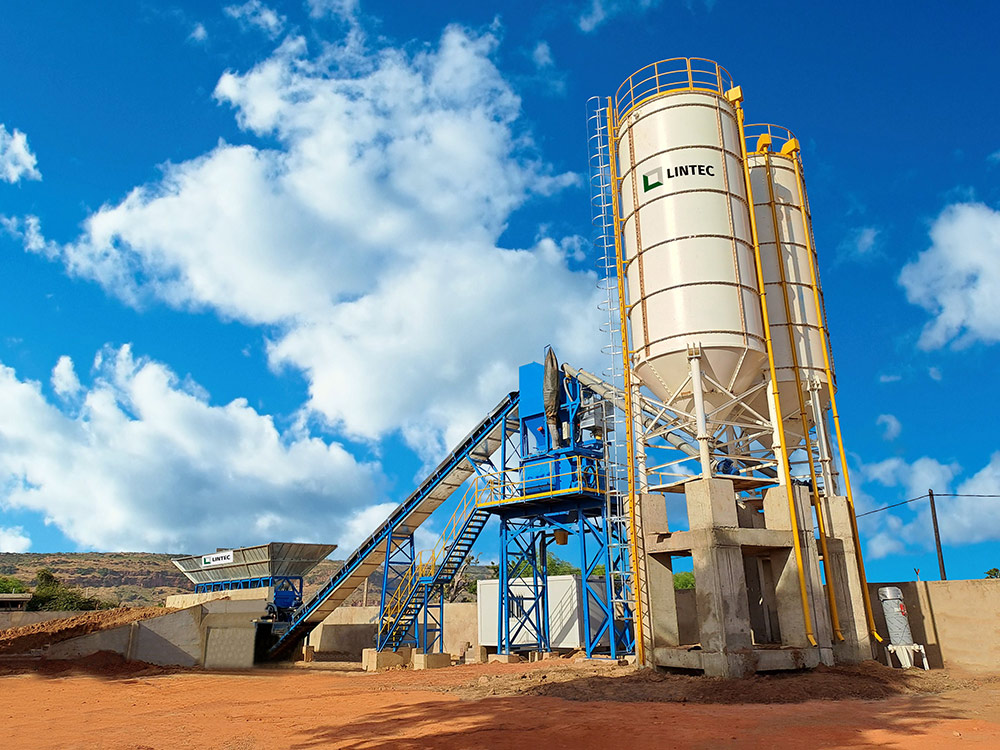
“We have already had the opportunity to support major projects across the continent, including in Madagascar, where a Lintec ECP60 worked on a major port redevelopment, and in Mali, where a Lintec ECP90 helped in supporting a nationwide push to increase public housing,” says Peow Aik. “These deployments underscore how we are responding to Africa’s need for mobile, efficient and durable concrete batching plants.”
Africa, stresses Peow Aik, remains a key strategic market for Lintec & Linnhoff. The company continues to grow its presence across the continent with trusted local distributors and service partners.
“We believe our success is built not just on our technology, but also on our close partnerships with customers, working side by side to understand project needs and deliver long-term value. From world-class automation and modular engineering to robust sustainability features, our concrete batching plants are helping to build the future of infrastructure across Africa and beyond,” he says.
To the future
Looking ahead, Peow Aik believes that several exciting innovations are on the horizon as the market continues to evolve:
AI and IoT integration: Lintec &Linhoff anticipates the growing use of artificial intelligence (AI) in batching control, optimising mix designs in real time based on environmental conditions or material variability. Internet of Things (IoT) sensors will provide predictive maintenance data, reducing unplanned downtime.
Full plant connectivity: Concrete plants will become smarter, networked systems. Centralised dashboards will allow companies to monitor multiple plants across regions from a single interface.
Greater modularity: Plants will become more reconfigurable, allowing customers to scale production, add or remove bins, or switch mix formulas easily, adapting to changing project demands.
Increased electrification: Lintec & Linhoff expects more systems to run on electricity, including solar-augmented controls, reducing fossil fuel dependence and making batching operations cleaner and quieter.
Circular economy principles: More plants will be designed to use recycled aggregates, waste concrete and industrial by-products, helping contractors meet environmental regulations while reducing raw material demand.
“Lintec & Linnhoff is actively developing solutions in each of these areas, ensuring our plants are future-ready and aligned with global construction trends,” concludes Peow Aik.