Vibrating screens play an integral role in mining and quarrying. The machines are essential for sorting, classifying and separating materials based on particle size, making them crucial across commodities.
As the quarrying and surface mining industries continue to evolve, so has been the design of vibrating screens to meet the increased need for more advanced screening solutions to handle the changing requirements.
According to Kleyn, several key trends are currently shaping the vibrating screen market in Africa. These include the need for high-capacity machines for brownfield expansions; demand for screens with a wide operating window to meet changing material conditions; and the growing focus on screen designs that minimise energy consumption and reduce wear and tear to ensure sustainable operations.
Additionally, there is a drive for the integration of digital solutions in modern vibrating screens to help optimise the screening process by detecting material variations and adjusting operational parameters accordingly.
To respond to these emerging trends, Weir has recently brought to market its new ENDURON® Orbital and ENDURON® Elite vibrating screen ranges. Customer feedback, says Kleyn, was crucial in informing some of the most important design elements of these new vibrating screens, incorporating direct insights into user needs and preferences.
High throughput needs
The African mining sector, says Kleyn, has in recent years witnessed a growing appetite for brownfield expansions, especially as opencast mines seek to ramp up production and increase throughput to meet rising demand for certain commodities.
Brownfield expansions, which entail the extension of operations at existing mine sites, are becoming increasingly common due to their lower risk and cost compared to developing new greenfield projects. These expansions leverage existing infrastructure, geological data and operational expertise to unlock new resources and extend the life of mines.
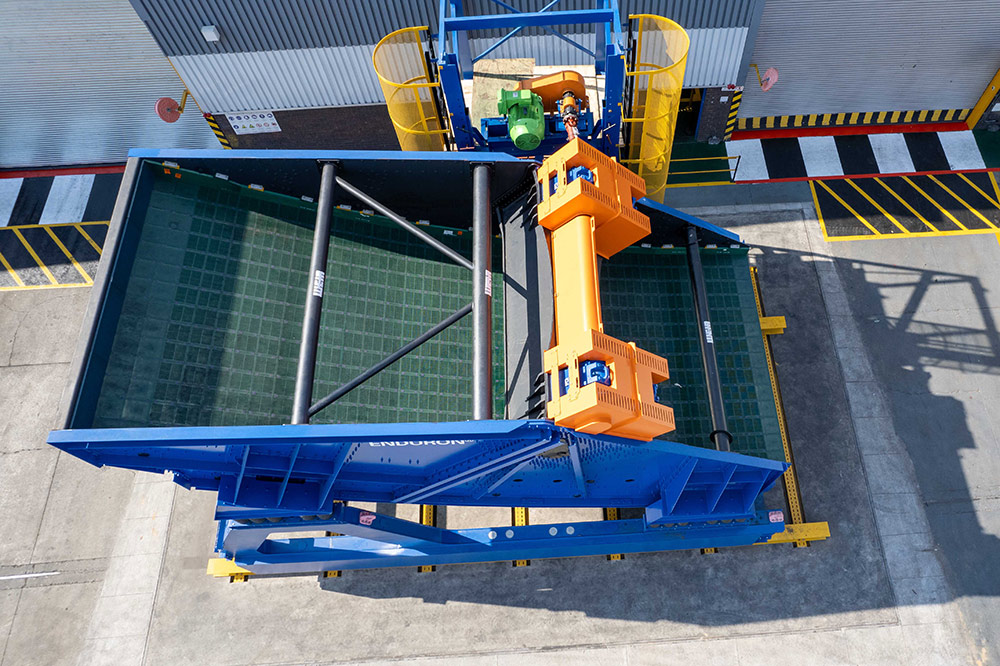
“On the back of this trend, we have seen a rising demand for large, high-capacity vibrating screens to enable high-throughput operations,” Kleyn expands. “Weir has responded to this trend with the 2024 launch of the ENDURON Elite vibrating screen range, offering some of the largest banana screens in the world. To provide context, the ENDURON Elite double-deck banana screens weigh up to 50 tonnes. Some of the first units operating in an iron ore application in West Africa measure 4,3 m wide by 9,7 m long, highlighting the massive nature of these screens to meet high throughput needs.”
One of the major design features of these screens are the large exciters. Weir’s ETX exciters, capable of driving a vibrating screen with a deck that spans 4,27 m, are said to have the largest capacity of any exciter currently available on the market. Their large size allows large vibratory screens to be driven with two exciters, reducing exciter drive complexity and maintenance costs. This provides high performance and long service life. In addition, fewer exciters to maintain on site translate into reduced downtime, routine inspections and inventory management.
Changing feed conditions
As mines get older and deeper, changing feed conditions, such as variations in ore grade, particle size and mineral composition, can significantly impact the efficiency and cost-effectiveness of mineral processing operations. Understanding and managing these changes is crucial for optimising mining operations.
“As mines get deeper, they start accessing areas of the pit that often contain different material from what they originally processed when they commenced operations. These variations in feed can disrupt the optimal operating parameters of processing plants, leading to overstretching of machines in some instances, and ultimately resulting in decreased recovery rates, increased operating costs and reduced overall profitability,” says Kleyn.
When feed conditions change, he adds, screens are subject to harmonic resonance, which can lead to structural failure. To mitigate against this, Weir has designed both its ENDURON Orbital and ENDURON Elite vibrating screen ranges with a wider operating window, giving operators greater flexibility to adapt operating parameters as feed conditions change.
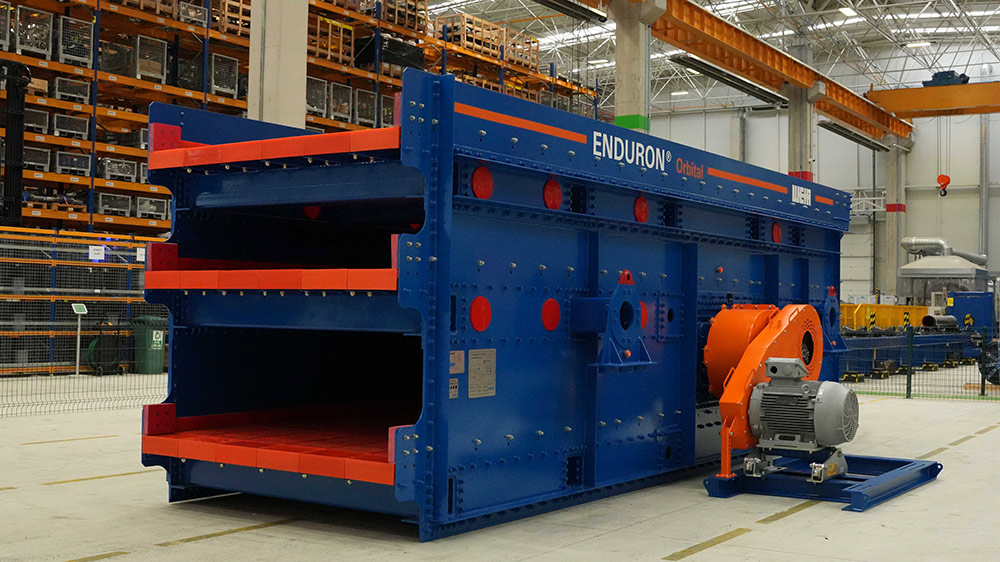
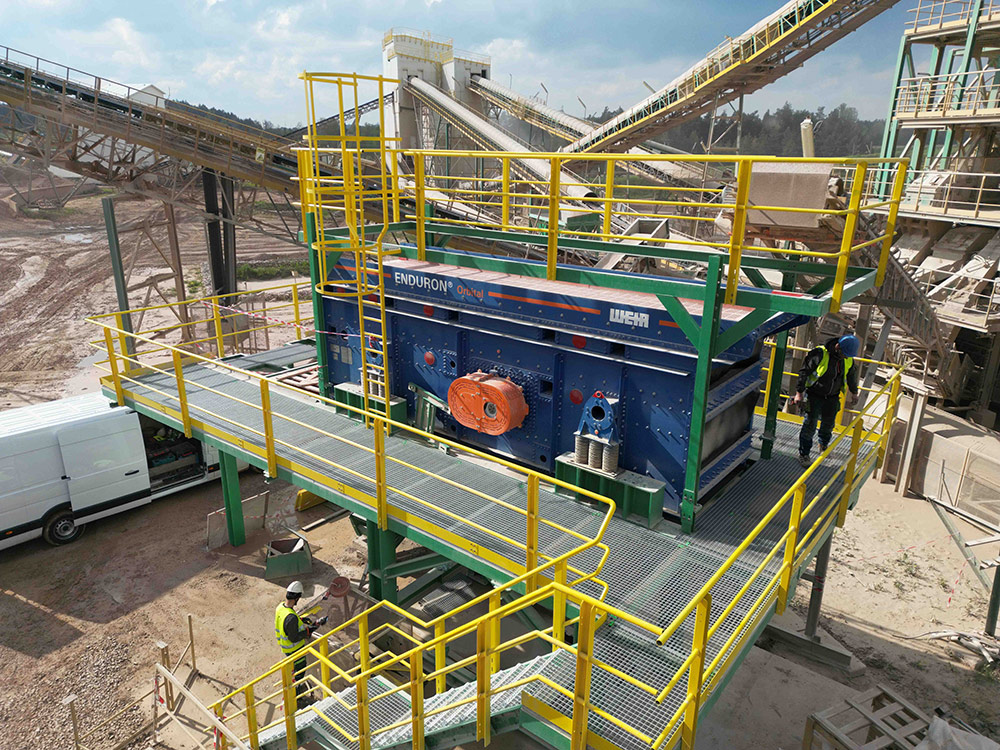
The ENDURON Orbital – ideal for smaller tonnage mining, aggregate and sand segments, with typical production rates of up to about 400 to 500 tonnes per hour, allows for throw-angle, speed and stroke adjustments without compromising the equipment’s structural integrity. As the application or feed conditions change, these screens can be easily adjusted without risk of structural failure related to harmonic resonance.
Sustainable screening
Additionally, Kleyn notes the growing trend towards more sustainable practices in mining processes, which has led to innovations in screen design to minimise energy consumption and reduce wear and tear. The shift towards sustainable solutions has significantly informed the design and manufacturing of the new Weir vibrating screens.
For example, the ENDURON Elite banana screens form part of Weir’s transformational flowsheet solution. “With the mining industry increasingly focused on sustainability, Weir is committed to helping its customers reduce their energy consumption in the grinding circuit. We have therefore developed our transformational flowsheet solution, which replaces traditional tumbling mills with HPGRs and vertical stirred mills,” he says. “Our transformational flowsheet features a closed circuit with the ENDURON HPGR in combination with ENDURON Elite banana screens. This powerful duo works together to deliver efficiency and cost-effectiveness for miners.”
Compared with traditional screen offerings such as triple shaft horizontal and incline machines, Weir’s ENDURON Orbital range is lighter, which allows for the use of smaller exciters than comparable offerings. The lighter nature of the screen often allows for use of a motor one size smaller than similar size screens, thus increasing efficiency and reducing the screen’s environmental impact.
In addition, the ENDURON Orbital range features an all-bolted construction that improves reliability by eliminating welding in high stress areas, allowing the screens to deliver greater performance and service life. The machines’ long service life is crucial for sustainability because it reduces the need for frequent replacements, thereby minimising resource consumption and waste generation.
Individual components can be easily replaced thanks to the modular screen construction, while common interchangeable screen parts reduce inventory overflow. Exciters are bolt-on/bolt-off, meaning they can be easily changed on site and refurbished in a mechanical workshop. Both E-series and C-series exciters feature the same bearings, shafts and seals, further reducing customer spares inventory.
Driving digitalisation
One of the emerging needs in the mining and quarrying markets, explains Kleyn, is the integration of digitalisation. As a result, modern vibrating screens are now equipped with sensors and control systems that help optimise the screening process by detecting material variations and adjusting operational parameters accordingly.
To meet this growing trend, Weir has recently added NEXT Intelligent Solutions to its extensive digital solutions offering. The new technology extends and expands its existing digital capabilities and transforms its process optimisation services into real-time digital solutions.
“NEXT utilises sensors and data analytics to provide real-time insights into screen health and performance, enabling predictive maintenance and process optimisation. This allows for increased uptime, improved efficiency and enhanced sustainability for mining operations,” concludes Kleyn.