South Africa’s sustainability challenge is no longer abstract; it is operational. According to the Department of Mineral Resources and Energy, the country remains one of the most carbon-intensive economies globally, with energy, mining and heavy industry contributing significantly to emissions. At the same time, businesses are under pressure from rising electricity costs, con-strained supply and increasing regulatory expectations around ESG performance. By Jehrene Devagopaul, Automation Product Manager, ABB South Africa.
For many organisations, sustainability has traditionally been framed as a long-term ambition, something to be reported on, rather than engineered into daily operations. But this approach is no longer viable. In today’s economic environment, sustainability must deliver measurable business value. The most effective way to achieve this is through operational efficiency.
Efficiency is no longer optional – it is strategic
Operational efficiency has emerged as one of the most practical and immediate levers for sustainability. Simply put, the less energy, material and time an organization uses to produce output, the lower its environmental footprint.
What makes efficiency powerful is that it aligns both environmental and commercial priorities. Reducing energy consumption lowers emissions while simultaneously cutting costs. Optimising processes improves productivity while reducing waste. This dual benefit makes efficiency not just a sustainability initiative, but a core business strategy.
In sectors such as mining, manufacturing and utilities, which are central to South Africa’s economy. Even marginal efficiency gains can translate into significant environmental and financial impact
Automation as the enabler
Achieving this level of efficiency at scale is not possible without technology. This is where automation plays a critical role. Through ABB’s Automation Extended approach, automation moves beyond traditional control systems to integrate electrification, digitalisation and lifecycle services into a unified separation of concerns automation ecosystem.
Advanced automation systems provide real-time visibility into operations, enabling organisations to identify inefficiencies, reduce downtime and optimise energy use. From intelligent motor control to digital monitoring platforms, automation allows businesses to move from reactive to predictive operations.
From ambition to action: South African proof points
In the pulp and paper industry, where energy intensity and process variability directly impact profitability, ABB Ability System 800xA distributed control system (DCS) is helping mills optimise both energy use and production performance. By tightening process control through advanced control strategies and loop optimisation, plants can stabilise operations, reduce variation and run closer to capacity.
Improved control of key areas such as digestion, evaporation and utilities not only lowers energy consumption but also improves overall asset utilisation and production reliability, which is essential in an industry facing increasing cost pressure and market volatility.
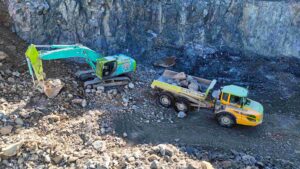
In mining, the focus has increasingly shifted from standalone control solutions towards long term operational efficiency enabled by unified automation platforms. Rather than operating separate systems for process control, power management and operational monitoring, System 800xA supports mining customers in bringing these domains together under a single DCS.
This approach enables a single control environment to manage various operations, from processing and dewatering to power distribution and materials handling. It incorporates integrated visual monitoring into automation, allowing operators to correlate live video with process alarms, events, and conditions. This allows visual context to be used as part of operational decision making, supporting faster diagnosis, safer response and more effective control actions, rather than treating video as a standalone system.
Standardizing control philosophies and embedding proven, domain-specific functionality within the automation layer allows mines to materially reduce complexity, improve operational stability, and drive consistent performance across the site. Rather than optimising process and power in isolation, a coordinated approach enables tighter control, quicker response to disturbances, and more efficient energy use.
In parallel, integrated monitoring and diagnostics give both operations and maintenance teams a common, real-time view of plant performance – supporting better-informed decision-making and a more proactive, disciplined approach to managing the operation.
System 800xA offers high-performance automation cost-effectively for industries under financial pressure. ABB’s technology improves operations and recognises our customers’ commercial challenges. ABB Automation Extended based on strategic automation principles, enabling industries to modernize gradually without disruption, system replacement, or extra costs.
By separating stable control from flexible digital features, it allows incremental upgrades with optimisation, analytics, and integration, protecting investments and maintaining cybersecurity. Its modular, lifecycle approach reduces complexity, lowers risks, and keeps automation practical and affordable for margin-focused industries pressure.
Rethinking sustainability for a constrained future
As South Africa navigates economic pressure, energy insecurity and climate commitments, businesses must rethink how they approach sustainability. The shift required is not towards more reporting, but towards smarter operations.
Operational efficiency offers a clear path forward, one that is measurable, scalable and immediately impactful. By leveraging automation and digital technologies, organisations can simultaneously reduce emissions, conserve resources, and improve their bottom line. Sustainability, in this context, is no longer a distant goal. It is a daily operational decision.