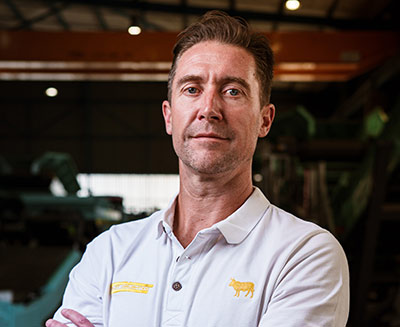
Titled “Why breaking ground may not be groundbreaking”, the presentation by Marais unpacked the growing trend towards the use of recycled aggregates in the local construction sector. “A topic that has grown with intention in the past 24 months is how recycled aggregates can help upcoming and existing crushing and screening operations to add new revenue streams, reduce operating costs and create value for construction customers,” he says.
Available figures, says Marais, show that the global recycled aggregates market reached US$8-10-billion in value in 2024 and is forecast to roughly double by the early-to-mid 2030s, at a growth rate of 6-7% per year, with recycled concrete aggregates setting the pace at a 9-10% annual growth rate.
In comparison, total aggregates demand globally only grows at 4-6% per year, meaning recycled aggregates are taking incremental share. While recycled aggregates are seemingly moving from niche to mainstream in selected applications, it is important to note that recycled aggregates still represent less than 10% of the total global aggregate demand to date.
Marais points out that recycled aggregates are not meant to totally replace virgin material, but are a complementary, lower-cost alternative, particularly in low-risk, high-volume applications.
“Virgin aggregates remain dominant for high-load or high-strength applications such as structural concrete, asphalt wearing courses and rail ballast. Growth for recycled aggregates is by application, not across all uses. Recycled aggregates are replacing the use of virgin material in low-risk, high-volume applications first – not technically critical layers,” says Marais.
Across materials
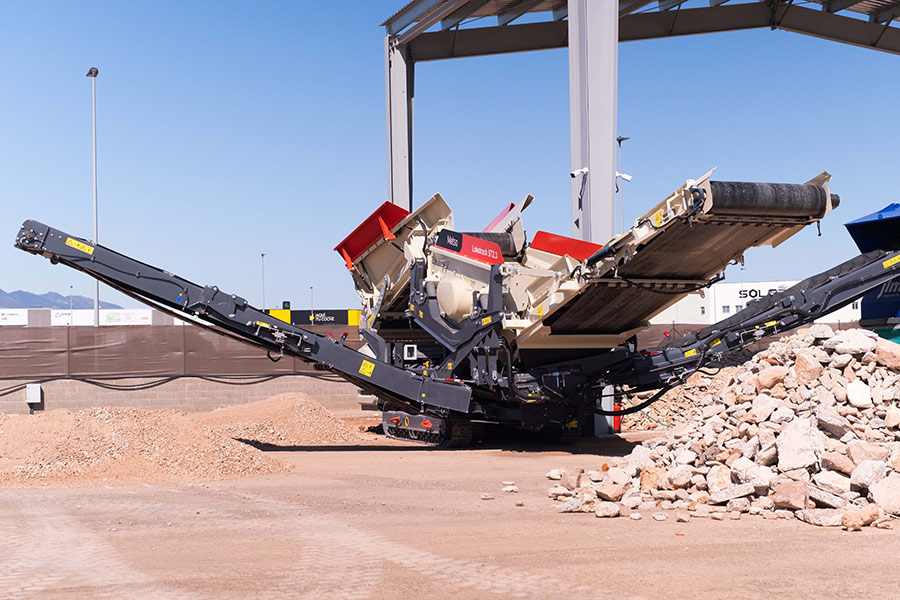
Through its close collaboration with local crushing and screening operations, Pilot Crushtec has observed that the move towards recycled aggregates entails all materials from Recycled Concrete Aggregate (RCA) and Reclaimed Asphalt to Mixed Recycled Aggregate (C&D Blend) and Recycled Masonry/Brick Aggregate.
RCA is crushed concrete from demolished buildings, pavements, and/or slabs, and it typically contains original natural aggregates with residual cement. This material, once processed, is widely used for road subbase, backfill and selected layers.
RAP is milled or crushed asphalt from road resurfacing and contains aggregate coated with aged bitumen. It is generally used in road base layers or can be reintroduced into asphalt mixes.
C&D Blend is a combination of concrete, brick, masonry and asphalt. This material usually has higher variability and is suitable for bulk fill, capping layers and lower risk applications. Recycled Masonry consists of crushed bricks and blocks which have a higher porosity and absorption. This material is usually limited to non-structural use only.
“From our experience, recycled aggregate is not in competition with the natural rock processed from a quarry, but rather a substitute, a blend or an added product line which is used to supply suitable applications – at a different price point and requiring a completely different overhead to those applied to the traditional method of processing rock from a quarry,” says Marais.
Why recycled aggregates?
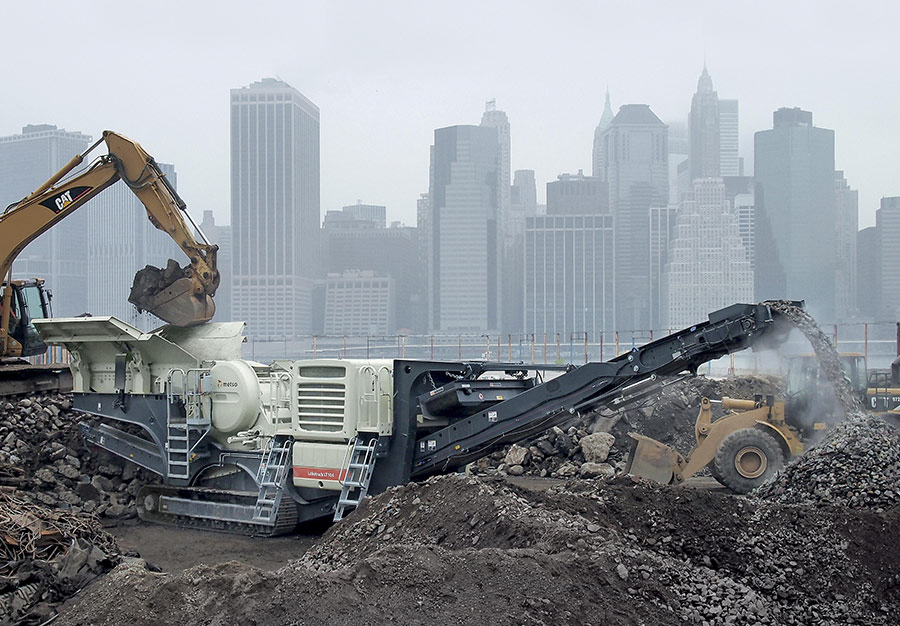
Quarry operators, says Marais, should consider incorporating recycled aggregates into their operations to diversify their product portfolios, improve profitability and enhance sustainability credentials. Using recycled materials allows quarries to extend the lifespan of their natural reserves and meet regulatory demands.
In South Africa, he says, obtaining a new quarry licence can take anything between five and ten years – if it happens at all. In addition, transport costs are rising, especially on the back of soaring diesel prices. Electricity is not only unreliable, but costly too.
“Traditionally, and to this day, the formulae to access raw material in quarries is known, costly, but proven,” says Marais. “Operations drill and blast in order to access high-quality rock from quarries. This is followed by load and haul, and ultimately, processing of aggregates into various sizes and grades. Although proven, these processes rely heavily on fossil fuels and are energy-intensive.”
Recycled aggregates, says Marais, can be more cost-effective to produce, as they often require less energy during processing compared to blasting, hauling and crushing virgin stone. In addition, operators can blend high-quality virgin materials with processed recycled materials to create customised, sustainable and high-margin products. By accepting construction and demolition waste, quarries can earn gate fees, turning a potential disposal problem for contractors into a revenue-generating opportunity.
Demand drivers
So, what is actually driving demand for recycled aggregates? According to Marais, the growth is not ideological; it is being driven by economic and operational realities. For example, tightening landfill restrictions are forcing recycling, not encouraging it. In many markets, he says, dumping is more expensive than crushing.
The adoption of recycled aggregates in infrastructure projects is another major driver. In fact, infrastructure accounts for 40-50% of recycled aggregates’ demand globally, with the material largely used in road base, subbase and bulk fill applications.
The rising transport and logistics costs constitute yet another demand driver. Recycled aggregates are said to often offer 30-50% lower delivered costs in urban areas due to reduced haul distance and avoided landfill fees.
Recycling insights
For operations that are considering the recycled aggregates route, Marais provides some practical, commercially grounded insights, reflecting how successful, quarry-linked recycling operations are being built globally and locally.
Firstly, he says, it is important to treat recycling as a quarry operation, not a waste handling facility. Successful recycled aggregate plants are run the same way as quarries, not waste yards. The same disciplines apply – consistent feed control, defined product specs, product discipline and quality management systems.
Recycled aggregate quality, says Marais, is driven more by processing and controls than by material origin. Poorly controlled recycling damages market trust quickly. “If you would not accept it in your quarry feed, do not accept it in your recycling feed. Controlling of the feedstock is therefore non-negotiable,” he says.
“Recycled aggregates are generally more variable than virgin aggregates. Variability comes from input material, not crushing. It is therefore crucial to define strict waste acceptance criteria – such as concrete only versus mixed C&D, as well as the exclusion of timber, plastics, gypsum and clay,” adds Marais.
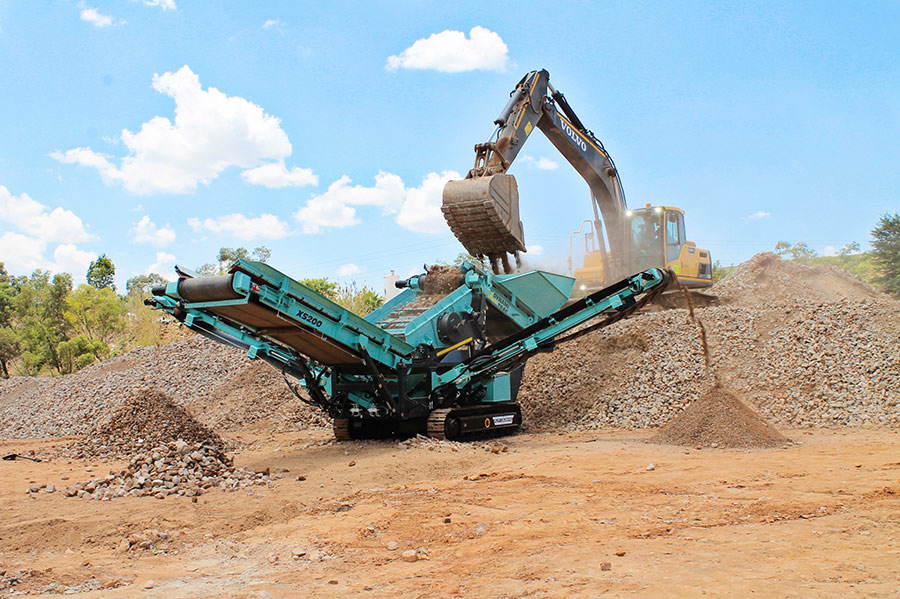
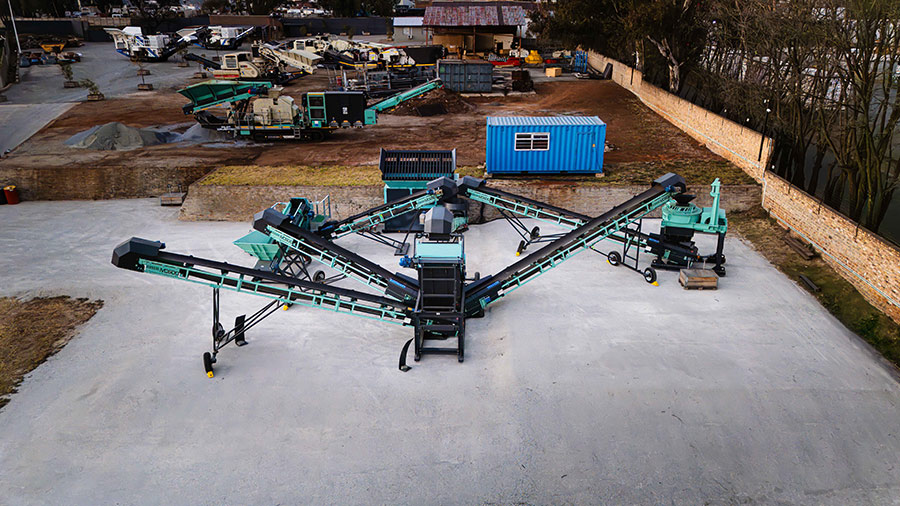
To get the best out of recycling operations, plant configuration matters more than many think, stresses Marais. Operations should avoid replicating virgin quarry plant layout blindly. Recycling plants typically require a primary crusher with good liberation – jaw or impact crushing, depending on feed. Magnetic separation for steel removal is also mandatory. It is also important to screen early and often, with optional washing (only if market justifies it).
“What we see as best practice is to start simple. Add complex parts of the plant when the market can pay for it,” says Marais.
Before investing in a recycling setup, operators must identify local demand first. Low-risk infrastructure layers all mean that demand for a recycled product will be available. It is important to then match plant output to specification needs, not theoretical quality. The reality in quarrying, says Marais, is that there is no premium for overprocessed recycled aggregate unless specifications demand it.
Marais advises operators to start with substitution, not full replacement of virgin material. “Successful operators target low-risk, high-volume applications first and then gradually move up the application opportunities once performance is proven. Earn trust at the bottom of the specifications ladder before taking complex requirements,” he says.
Breaking ground
Given this scenario, says Marais, “breaking ground may not be that groundbreaking”. Those who intend to drive their business forward by only breaking ground may be ‘left buried in the ground’ by their competition.
“On the back of fierce competition in the industry, price cutting, rising costs and regulatory pressures, changing how materials are sourced might be a profitable way the industry can assure the quarries of tomorrow, continuing operations in ways that not only keep players competitive, but does some greater good as well,” concludes Marais.