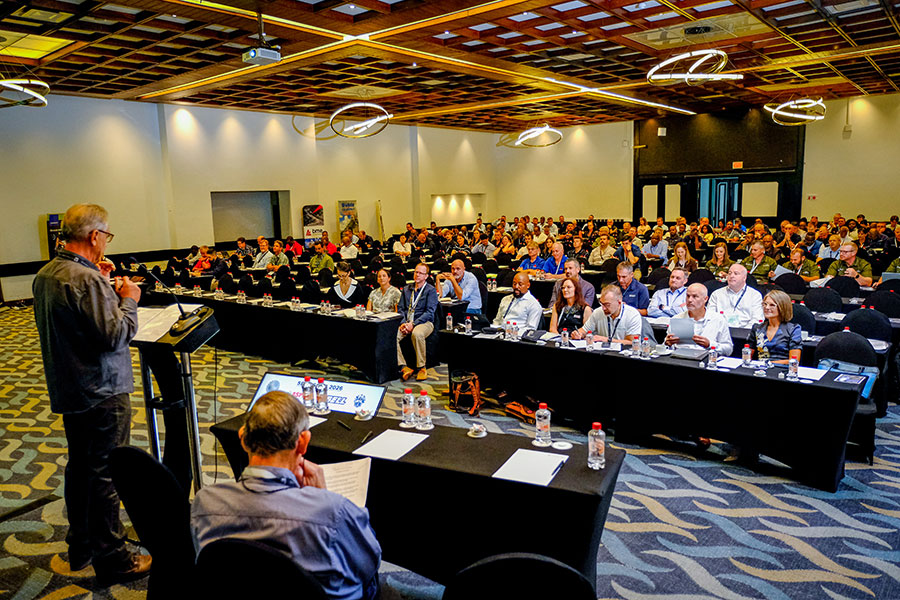
The South African quarrying sector continues to demonstrate remarkable resilience despite facing significant challenges, including a subdued construction industry and mounting regulatory and financial pressures that constrain growth. Under the theme, “Thriving in Uncertainty”, this year’s IQSA Conference showcased the industry’s ability to adapt, innovate and remain resilient in the face of an increasingly volatile operating environment.
Speaking to Quarrying Africa, ASPASA director Letisha van den Berg, who is also the newly-appointed chairperson of IQSA, highlights three key challenges currently facing the quarrying sector – overregulation, skills shortage and illegal mining.
“Overregulation and illegal mining are particularly the top operational challenges for ASPASA at this stage. These factors threaten the economic sustainability and safety of legitimate surface mining and quarrying operations,” she says. “Illegal mining puts undue pressure on surface mining companies already struggling with spiralling input costs and generally tough trading conditions. Overregulation harms the industry by increasing compliance costs, causing severe permitting delays, discouraging investment and unintentionally encouraging illegal mining.”
Additionally, skills shortage is another a major factor impeding industry growth. IQSA is actively focused on bridging industry gaps through strategic partnerships, continuous education and endorsed training programmes. By combining ASPASA’s role as a corporate representative with IQSA’s focus on individual professionals, Van den Berg says the two associations are pulling resources and addressing industry-wide challenges together.

Collaboration is key
While quarry operators continue to face significant volatility due to slowing construction pipelines, shifting government policies and high operational costs, the industry generally remains resilient and is adapting to survive these uncertain times.
The strong interest in this year’s event, says outgoing IQSA chairman, Jeremy-Hunter-Smith, showcased the industry’s renewed interest in the conference. With 280 delegates and 35 exhibitors, the 2026 IQSA Conference was the largest in many years. Central to the growth of the industry event has been collaboration.
“As an industry we need to highlight the importance of collaboration to unlock growth,” says Hunter-Smith. “One such collaboration is between IQSA and ASPASA. In recent years, we have been working together to make sure we serve the industry. By working towards common goals, such as bridging the skills gap, we continue to make a difference.”
In the spirit of collaboration, the 2026 IQSA Conference had a strong international component, with executives and groups of young professionals from Australia, New Zealand and other affiliated branches. One of the key topics on the agenda was skills development through knowledge sharing.
One of the standout presenters at the show was James Thorne, CEO of The Institute of Quarrying in the UK, who spoke about the shared challenges that the quarrying industry faces globally. One of the critical problems he highlighted was the ageing workforce, with a significant portion of experienced employees approaching retirement, leading to a major loss of institutional knowledge and skills.
This demographic shift is compounded by low recruitment rates, creating an urgent challenge for future production. This is a common problem in South Africa, and industry stakeholders used IQSA 2026 to share ideas on how to attract young people and plug the skills gap.
Reinforcing the need for collaboration, Hunter-Smith also highlights the importance of partnering with supply chain counterparts to adopt technology and unlock operational value. The quarrying industry, he says, should adopt technology to improve worker safety, increase operational efficiency and manage resources more effectively.
The use of smart devices and other IoT technology, says Hunter-Smith, is growing at a rapid rate, and local quarry operators cannot afford to ignore the benefits of using the latest technology to extract as much performance data as possible.
Solutions galore
To thrive amid uncertainty, the quarrying industry relies on supply chain partners that can provide innovative solutions tailored to changing industry demands, enabling quarry operators to remain competitive and responsive to global and local trends.
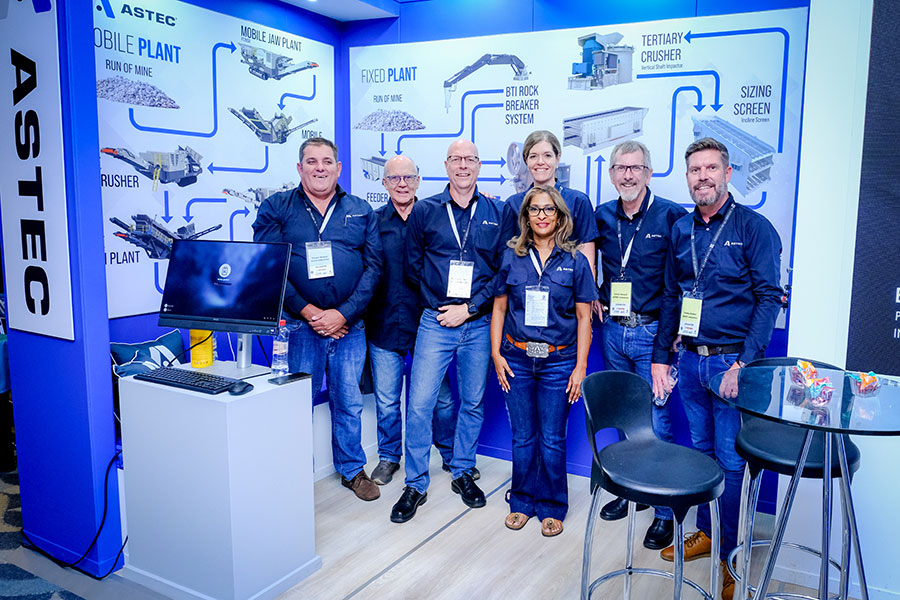
Astec Industries was one of the key exhibitors at the 2026 IQSA show. The company used the show to demonstrate its commitment to helping quarries thrive in uncertainty through solutions that address current industry needs such as safety and efficiency, says Calvin Fennell, Business Line Manager Capital Sales at Astec Industries Africa Middle East.
A major highlight for Astec was the new A Series, a new-concept jaw crusher range that the company has just introduced to the local market, initially with the launch of the A50. With efficiency a key priority for quarry operators, the A50 features longer liners with an improved nip angle to maximise material grip, reduce wear and increase crushing efficiency. The interchangeable fixed and swing liners extend wear part life, simplify maintenance and lower operating costs.
In addition, Astec showcased its T Series cone crusher range. “The Titan T-Series range is not necessarily new to the market. We have been making these cone crushers in the United States for a while. However, the local production programme is underway in South Africa – starting with the T200 and T300 – to shorten lead times and strengthen regional support,” says Fennell.
Commenting on some trends taking root in the market, Fennell makes special mention of the greater requirement for safe operations. Astec, he says, is responding to this by bringing solutions to market that put safety at the core of their design. For example, the new A50 jaw crusher casts the spotlight on safety through an array of features.
This includes the no-chamber entry design, which eliminates the need for personnel to climb inside the chamber to make adjustments or service components. The crusher also features patented interchangeable toggles, hydraulic and mechanical toggle options that eliminate heavy wedges and side plate cutouts for fast, safe adjustments and quick resets after an uncrushable event.
“We have also seen that customers are looking for tailored solutions, especially in areas such as sand production. With our local manufacturing capabilities, enabled by a local factory with a 106-year legacy behind it, we are able to respond to specific customer needs timeously,” says Fennell.
In addition, he says, quarry operators are placing high value on aftermarket support to prevent costly equipment downtime, extend machine lifespan and maximise production efficiency. Through reliable parts support and expert services, Astec ensures machines run safely while lowering the overall cost per tonne.
Reliability of supply
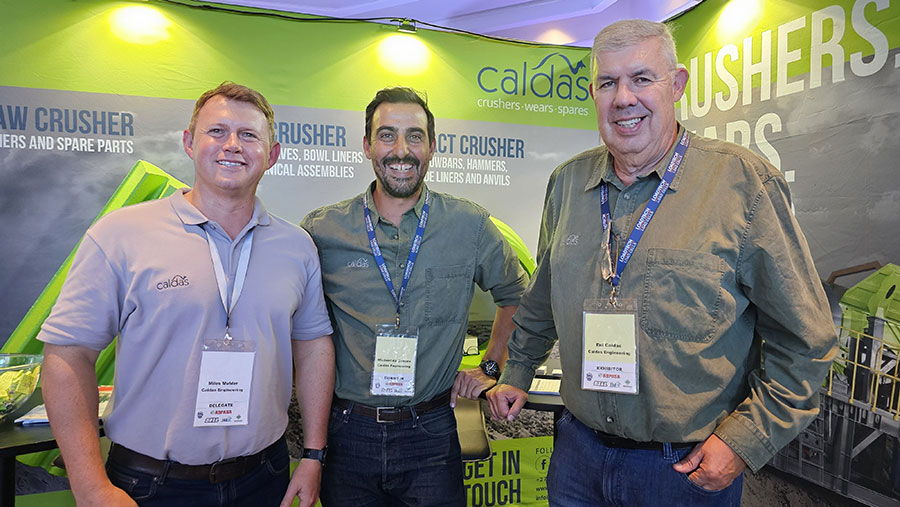
Michael Da Camara, Chief Operating Officer at Caldas for Crushers Wears Spares, says this year’s engagements at the IQSA Conference highlighted the industry’s need for reliability of supply. Operating in an already tough environment, quarry operators, he says, want a secure supply for replacement parts to prevent costly equipment downtime.
“In quarrying and mining, a single broken machine such as a crusher or screen, can stop the entire operation. Reliable access to spare parts is crucial to avoid lost sales, keep maintenance costs down and extend the lifespan of the equipment. At Caldas, we have put systems in place to ensure that we are able to support customers with their alternative wear and spare parts needs, even in some of the toughest environments,” says Da Camara.
Da Camara also notes a growing trend towards modular plants in the quarrying sector. Modular solutions, he says, are favoured for their rapid deployment, reduced transportation costs and the ability to operate in remote or confined locations, offering a cost-effective alternative to traditional fixed infrastructure.
“At Caldas, we have responded to this with the launch of our CQ modular range to provide a practical and scalable alternative to traditional plant setups, tapping largely into a market where capital is limited. These solutions are easy to set up and maintain. They can also be easily slotted into existing plant setups – whether primary, secondary or tertiary,” says Da Camara.
Second year running
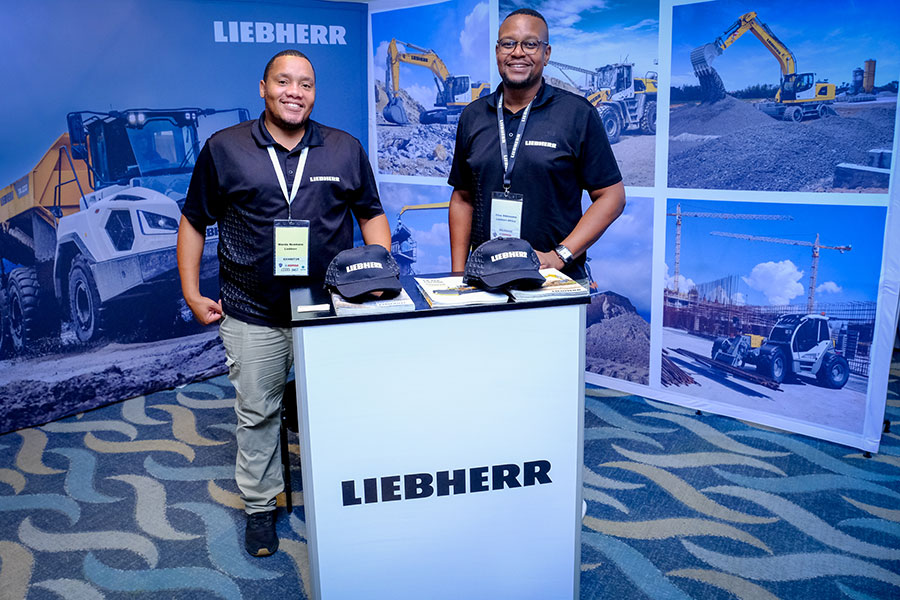
For the second year running, Liebherr-Africa exhibited at the IQSA Conference, highlighting its commitment to the industry. The company put strong emphasis on its 28-tonne TA 230 articulated dump truck. Recognised for its innovative design with a Red Dot Design Award in 2021, the TA 230 made its local debut in 2022. To date, it has been deployed in both underground and surface applications, with 19 units operating across southern Africa.
“The TA 230 has been well received in the local market. Apart from its innovative design, the unit comes with a competitive warranty of 5 000 hours/36 months, giving customers a peace of mind,” says Wanda Ncemane, sales specialist at Liebherr-Africa.
Data-driven decisions
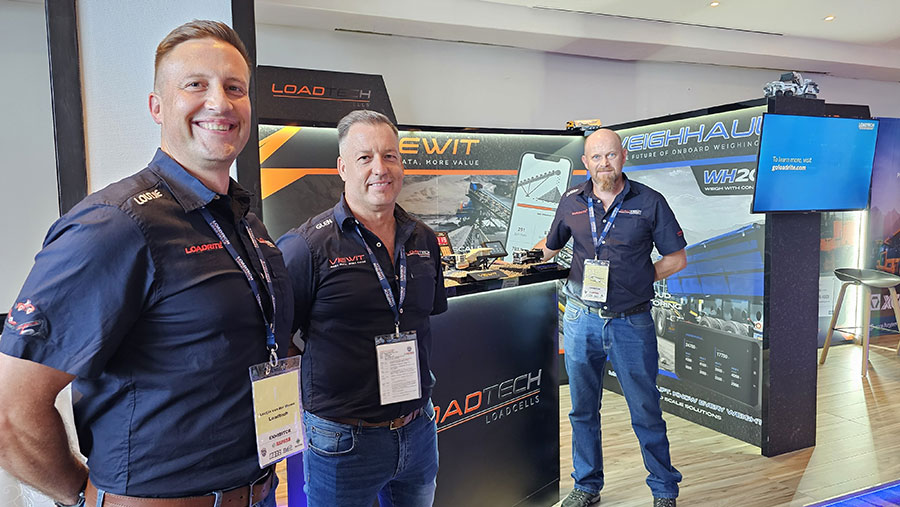
In line with the growing trend towards data-driven decisions in the quarrying sector, Loadtech used this year’s IQSA Conference and Exhibition to showcase its precision load cell technology alongside its cloud-based data platform.
“At this year’s show, we particularly showcased our precision load cell technology for belt scales and crushers, alongside ViewIT, our cloud-based data platform designed to provide real-time visibility of production and equipment performance,” says Glen Webster, operations director at Loadtech.
Loadtech’s load cells are engineered for accuracy, durability and reliability in harsh quarrying environments, ensuring precise measurement of material flow on conveyors and crushers. When integrated with ViewIT, users gain access to real-time data, remote monitoring and automated reporting. This enables improved production tracking, reduced material losses, better maintenance planning and enhanced operational efficiency.
Launched in mid-2024 and available on both Apple and Android platforms, Loadtech ViewIT provides businesses with an easy-to-use data intelligence platform that brings together data ingestion, storage, visualisation, analysis and trend prediction in one unified interface.
ViewIT is Loadtech’s in-house-developed remote monitoring system that allows customers to view any of their assets from anywhere, be it a silo, weighbridge, hoppers or mobile crushers. In an environment where mines and quarries generate lots of data from their assets, the system helps them to interpret the raw data into actionable insights. Dashboards can be tailor-made to meet each customer’s data viewing and reporting needs.
Simple tools
JMH Equipment, the southern African distributor of the Soosan Cebotics range of hydraulic crawler drills, highlighted the importance of simplicity in drill rigs, which is why its JD 1400 has seen a huge uptake in the local market.
Maurits Holtzhausen, MD of JMH Equipment, says that while the move towards intelligent machines in mining is apparent, he believes that the core mechanics and day-to-day operation of drill rigs must remain simple.
“It is my view that drill rigs must be simple, primarily because the constant, intense vibrations can cause havoc to electronic setups. Simpler, mechanical machines have fewer moving parts, making them easier to fix in the field, more reliable and cheaper to maintain, thus maximising uptime and reducing operating costs,” says Holtzhausen.
First time
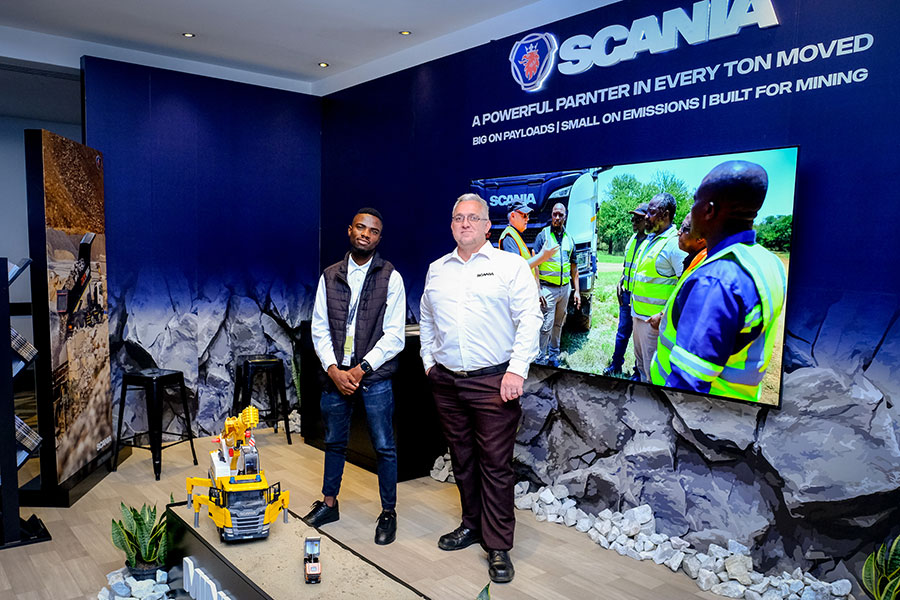
In an environment where customers are chasing efficiencies to thrive in uncertain times, Scania Southern Africa exhibited at the IQSA Conference for the very first time this year, with a major focus on its Scania mining tipper, an efficient alternative to traditional yellow metal hauling solutions.
At a time when diesel prices have reached the highest point in history, Vinesh Kalu – key account manager – Scania Mining at Scania South Africa, says it is high time quarry operators start opening up to new hauling solutions such as the Scania mining tipper.
One of the major talking points on the new heavy mining tipper is the 60-t gross vehicle mass (GVM) with a rated payload of 40 t, which plugs the payload gap between conventional tipper trucks and their yellow metal counterparts. With its excellent equipment-to-payload ratio and greatly improved technical availability, the new offering can be specially tailored to meet any type of mining-specific demands.
Customers can also benefit from the truck’s fuel efficiency, a critical parameter, not only to help mining and quarrying customers reduce their cost per tonne, but also to meet their emission reduction efforts in line with their Environmental, Social and Governance (ESG) targets.
“Conversations with several quarrying customers show that there is strong interest in the Scania mining tipper. In recent times, we have afforded various quarry operators the opportunity to demo the truck and experience the benefits based on the conditions at their own operations. We are open to providing customers with an opportunity to trial the truck in their own operating environments,” says Kalu.
Debut appearance
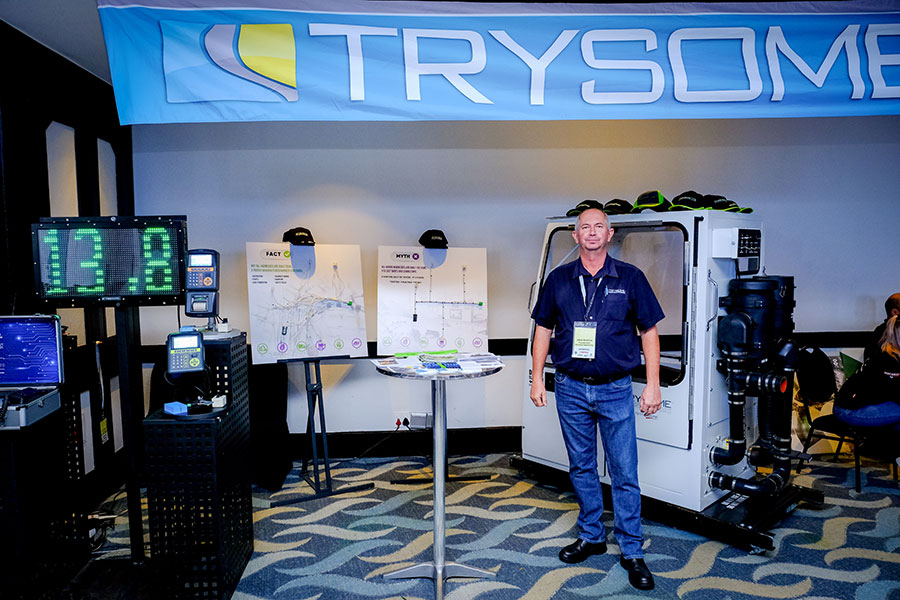
Another company that made its debut at the show was Trysome Auto Electrical Engineering (Pty) Ltd, showcasing its ability to deliver practical, solution-driven innovation to the quarrying industry.
One of the key highlights at the company’s stand was its Sy-Klone International demo training cab, which addresses the new ISO 23875 cabin air-quality standard. It features engineering controls such as positive cabin pressurisation, HEPA filtration, and CO₂ monitoring needed to protect equipment operators from harmful airborne dust like crystalline silica and diesel particulate matter.
“At Trysome, our core business centres on starters, alternators, and batteries, and we take great pride in showcasing our industry-leading expertise in these areas. We also utilised the IQSA Conference to demonstrate our ability to assist with electrical harness repairs to OEM standards,” says Johan Momberg, Group Business Development Manager at Trysome.
In addition, the company showcased its VEI onboard weighing systems, which ensure real time monitoring of accurate truck loading every time. These solutions, says Momberg, have been well received in the African market as quarry operators seek to run efficient and productive loadout processes.
“During conversations with the quarrying community at the show, it was apparent that the industry is placing a major focus on connected solutions. At Trysome, our range of technologies directly addresses the industry’s need for connected solutions, while enabling us to deliver optimal uptime for our customers. Our smart systems allow quarry managers to make informed, data-driven decisions,” concludes Momberg.