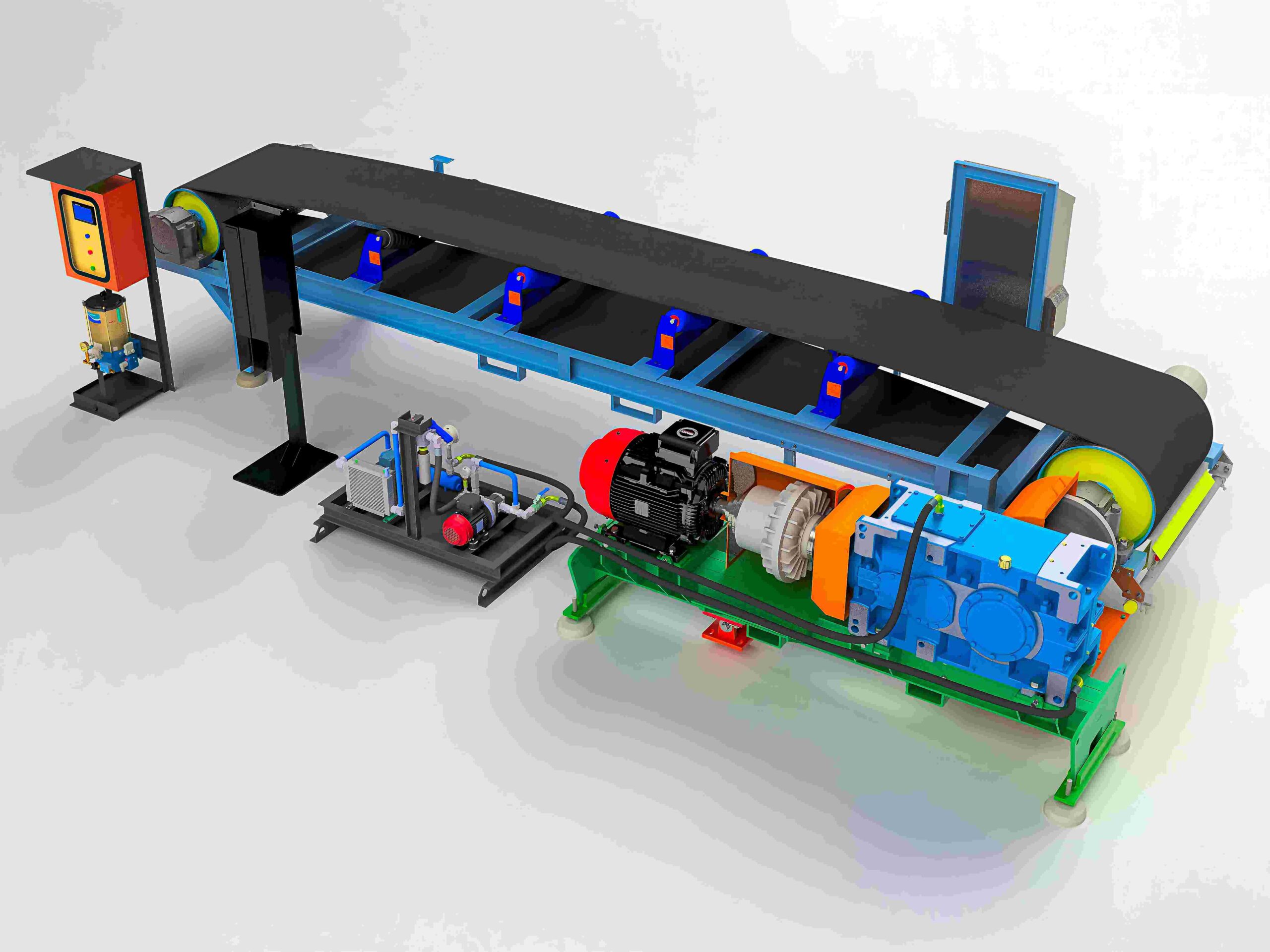
By bringing the mechanical, electrical, lubrication and condition-monitoring elements of a drive system together, BMG provides a co-ordinated solution focused on improving conveyor availability, reliable operation, practical maintenance and extended service life.
BMG provides engineered turnkey drive packages for belt conveyors and feeders used in mining and bulk materials handling. In these demanding applications, conveyor performance depends not only on the individual components installed, but also on how effectively the motor, variable-speed drive, couplings, gearbox, pulleys, bearings, lubrication system and condition-monitoring technologies work together as an integrated system.
“Conveyor and feeder drive systems should operate as co-ordinated assemblies, particularly where equipment is exposed to demanding loads, challenging environmental conditions and restricted installation space,” explains Rudzani Ramuageli, Head of Projects, BMG.
“Our Technical Resources and Projects teams assess the complete drive requirements and bring the relevant technologies together in a package that supports reliable operation and practical maintenance. The objective is to engineer the drive train as an integrated system, so that the interfaces between components support conveyor availability, rather than create potential points of failure.
“Each drive package is configured for the specific application, taking into account material throughput, belt speed, starting and operating torque, duty cycle, environmental conditions and installation constraints. The engineering process starts with the required tonnes per hour and belt speed and works backwards through pulley torque, gearbox ratio, motor power, starting characteristics and control philosophy. This application-specific approach allows the principal drive components and supporting systems to be selected as an integrated package, rather than as separate items of equipment.
“Depending on the operational requirements, a package may include an electric motor, variable-speed drive, application-specific high-speed or fluid coupling, industrial or planetary gearbox, drive pulley, protective guarding and a purpose-designed base frame.”
Gearboxes can be installed using standard torque arms or specially manufactured torque arms. Customised units are designed to accommodate the equipment configuration, available space and site-specific installation requirements, helping ensure that the gearbox mounting arrangement is suited to the overall drive layout.
Lubrication and cooling systems can also be incorporated where required, together with automatic lubrication equipment and local electrical controls.
Integrating these systems into the drive package supports routine maintenance and ensures that lubrication, cooling and control requirements are considered during application engineering, rather than addressed separately after the principal mechanical equipment has been selected. By engineering these supporting systems together, BMG helps reduce avoidable interface and maintenance risks that could compromise conveyor availability.
BMG also connects the engineered drive package to a condition-based maintenance strategy by integrating condition monitoring through the variable-speed drive or providing shock-pulse monitoring and vibration analysis. This combined capability enables the operating performance of power-transmission components, including applicable bearings, to be tracked and trended.
Changes in component condition can therefore be identified at an early stage, giving maintenance teams better information for planning inspections and corrective work. This supports a more informed maintenance strategy and helps reduce exposure to failures that could result in unplanned conveyor or feeder downtime. For mining operations, this links component-level condition information directly to the broader objective of protecting conveyor availability and production continuity.
Although the conveyor structure itself falls outside BMG’s scope, the company works closely with pulley and idler manufacturers by selecting and supplying bearing solutions in accordance with their designs and technical specifications. Bearing selection considers radial and axial loads, shaft dimensions, operating speed and expected misalignment.
Contamination levels, sealing arrangements and lubrication requirements are also assessed to ensure that the bearing arrangement is appropriate for the intended pulley or idler duty and its operating environment.
BMG’s involvement begins with site assessment and application engineering, followed by component selection, assembly and factory alignment. The company can also provide installation supervision and commissioning support, helping ensure that the assembled package is installed and brought into operation in accordance with specific application requirements. This lifecycle involvement extends the focus on conveyor availability from initial engineering through installation and commissioning.
BMG’s integrated approach is designed to simplify the complexity associated with co-ordinating multiple drive-system components and suppliers. It also provides a consistent engineering basis for component selection, mounting, lubrication, control and condition monitoring, helping manage interfaces between systems and suppliers that could affect conveyor availability.
By combining these disciplines within a turnkey drive package, BMG focuses on improving the availability, maintainability, reliability and long-term performance of belt conveyors and feeders used in mining and bulk-materials-handling operations.