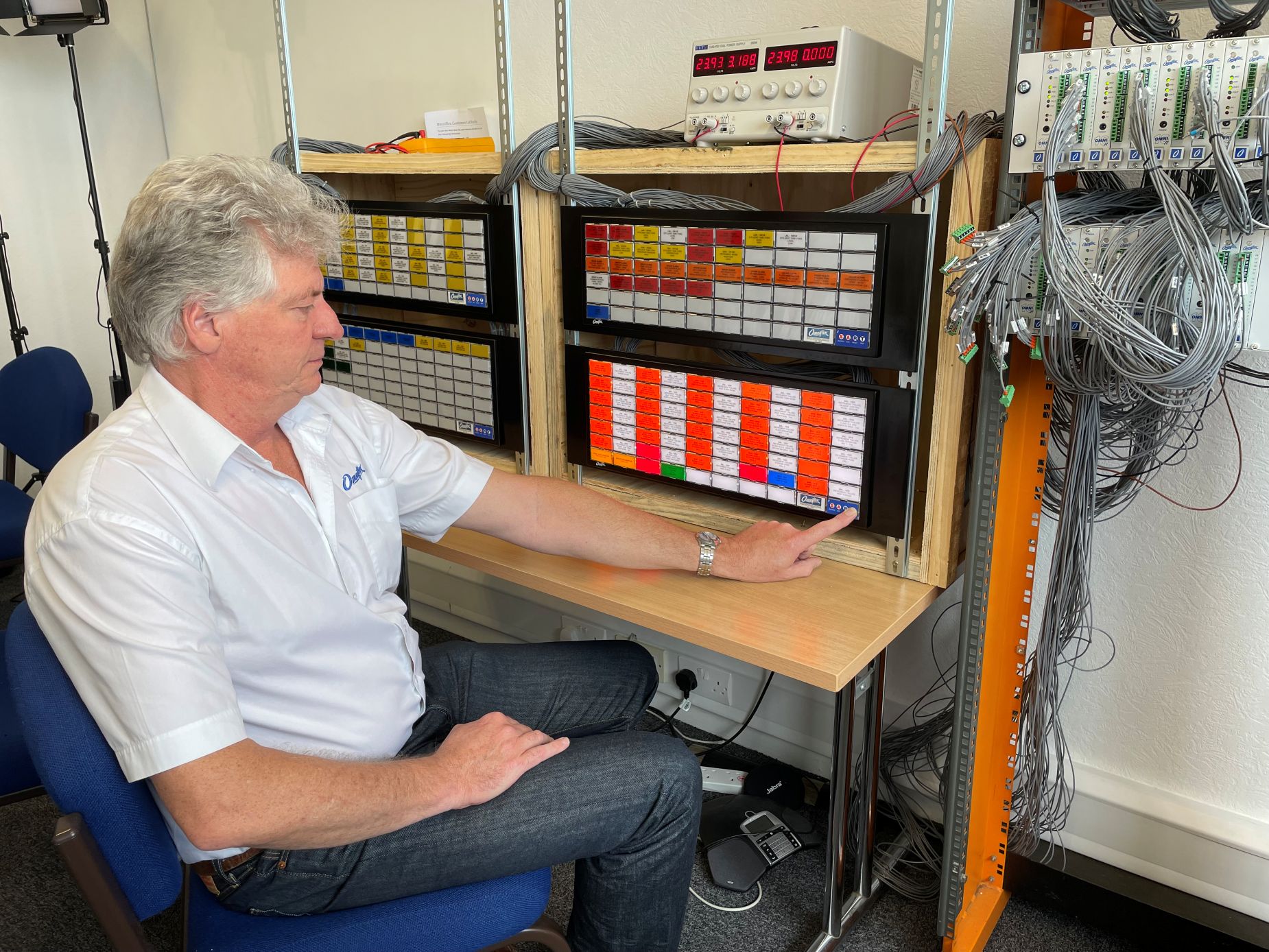
Industrial alarm systems can remain in service for many decades, but that does not always mean they will remain supportable or suitable for the demands placed on them. Plant operators and engineering teams may face two problems; the original manufacturer may no longer exist, leaving no source of spares or technical support, and the system itself may predate changes in safety standards and industry guidance. Here, Gary Bradshaw, director at legacy alarm replacement specialist Omniflex, looks at how operators can address these challenges without unnecessarily replacing an entire installation.
Alarm management is not a static discipline. EEMUA 191, the established guide to alarm system design, management and procurement, is intended to help operators improve existing systems as well as develop new ones. Its guidance is relevant when existing alarm systems must be refurbished, making the condition and suitability of legacy equipment an important consideration for plant engineers and operators.
This is a situation we regularly encounter as alarm annunciators from the 1970s to the 1990s are still found operational in critical industrial applications. Highland Electronics’ MPAS90 alarm annunciators, for example, were widely used in industrial facilities but its manufacturer is no longer in business. This also applies to other systems from manufacturers including Rochester, Robinson, ICS and Bristol Babcock who also no longer manufacture and support these old legacy products.
At the same time, a system installed decades ago may need to be assessed against the safety requirements and guidance that have developed since its installation. IEC 61508, for example, sets requirements for the functional safety of electrical, electronic and programmable electronic safety-related systems, while EEMUA 191 provides guidance on effective alarm systems and safety integrity level (SIL) certification is often an industry must.
The challenge is how to bring a legacy installation up to date without creating unnecessary disruption. Replacing an entire alarm system can mean removing established wiring and panels, redesigning the installation and taking critical equipment out of service during the upgrade. A retrofit approach offers a practical and cost-effective alternative.
For example, Omniflex’s OMNI16R was developed as a replacement for legacy rack-based alarm systems including the MPAS90. By designing the replacement around the existing installation, the system can use existing panel space and wiring. For the plant operator, that can mean less engineering work during an upgrade and reduced disruption during installation and testing.
The same principle applies to the wider OMNI16 product range from Omniflex. The original product was launched in 1981, and successive versions supplied by Omniflex have retained the same physical dimensions and functionality whilst also incorporating additional modern features meaning that they can be incorporated into the established installation, helping operators address obsolescence without treating the whole system as disposable.
The principle is that technology can develop without requiring the customer to discard everything that came before it. Future requirements can also be accommodated through additional modules or functionality, rather than requiring customers to replace an entire system simply because a new capability has emerged.
The approach is also relevant to all the UK’s nuclear facilities, where Omniflex has supplied their products since the late 1980s. The largest growth now in this business sector is replacing legacy alarm systems to overcome obsolescence issues whilst causing minimal disruption and costs to provide upgrades to meet the latest safety standards.
Ultimately, engineers and operators dealing with legacy alarm systems need to consider who supports the equipment today, can replacement parts still be sourced, does the system meet the safety requirements, and can it be upgraded using the existing installation rather than replaced wholesale?
For sites with critical alarms, answering those questions before a failure occurs can turn obsolescence from an emergency problem into a planned engineering project. To find out more about Omniflex’s expertise in legacy alarm replacements, visit its website.