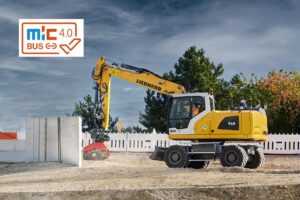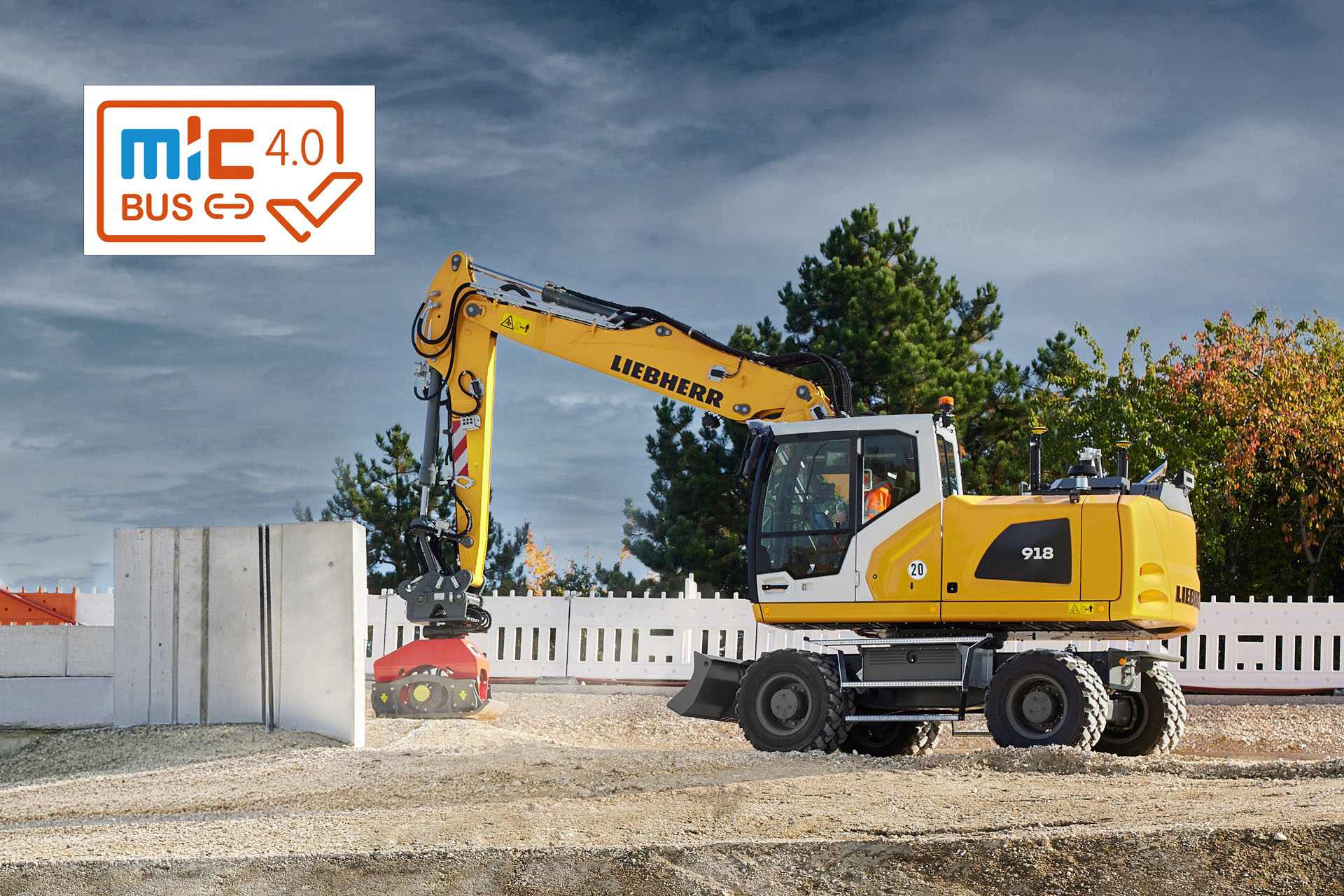
Liebherr is integrating the cross-manufacturer MiC 4.0 BUS communication standard into its Generation 8 wheeled excavators, paving the way for safer, more efficient and cost-effective operation of modern attachments.
By integrating the MiC 4.0 BUS, Liebherr is underlining its commitment to offering users forward-looking solutions for safe and productive construction site operations. The Generation 8 wheeled excavators combine high-performance machinery with modern digital interfaces, paving the way for efficient work processes on networked construction sites.
Digital solutions play a key role in boosting efficiency, safety and productivity on modern construction sites. Against this backdrop, Liebherr is expanding the connectivity and integration capabilities of its 8th-generation wheeled excavators to include the cross-manufacturer communication standard MiC 4.0 BUS.
This standardised interface enables the automated exchange of data between the machine and compatible attachments. This significantly simplifies their integration into the work process, reduces the workload on operators and minimises sources of error. Liebherr is thus laying the groundwork for the cost-effective use of specialised attachments.
MiC 4.0 BUS is a cross-manufacturer communication standard for the intelligent exchange of data between the host machine and the attachment. When a MiC 4.0-ready attachment is coupled to the machine, information such as the attachment type, serial number and operating parameters – including oil pressure and flow rate – is automatically transmitted to the machine via the MiC 4.0 BUS, without the need for any additional input from the machine operator.
This simplifies the use of intelligent attachments, such as tiltrotators. Machine operators benefit from more convenient attachment changes, whilst operational and process safety, as well as efficiency on the construction site, are further enhanced.
Until now, connecting complex attachments, such as tiltrotators, to a wheeled excavator has often involved considerable effort and prolonged machine downtime. Necessary modifications to the carrier machine could also have implications for existing approvals and conformity assessments, such as CE marking.
The MiC 4.0 BUS significantly reduces this effort and makes it easier to integrate attachments into site operations. This simplifies the deployment of new attachment solutions and reduces potential risks during the integration process.
The digital connectivity of the MiC 4.0 BUS lays the foundation for more transparency regarding the use of attachments within the fleet. Information on usage, operating hours or maintenance status can in future be viewed via the MyLiebherr Maintenance & Performance customer portal. This gives fleet managers a better overview of how their attachments are being used.
This additional transparency enables proactive planning of maintenance measures, optimises the availability of the attachments in use and contributes to more efficient fleet operations. As a result, the MiC 4.0 BUS becomes not only an interface between the machine and the attachment, but also a building block for data-driven fleet management.
A key advantage of the communication standard lies in fleet flexibility. MiC 4.0-Ready attachments can be swapped more easily between MiC 4.0-Ready carrier machines via the MiC 4.0 BUS – even across different manufacturers. The MiC 4.0 BUS will therefore ensure more flexibility and efficiency in modern machine fleets in future.