That there is a growing willingness to adopt PDS/CPS technology in the local quarrying sector is no overstatement. According to Lourens, interest in the technology has increased significantly in 2026 across both surface and underground operations.
He attributes this growing uptake partly to the high number of mining fatalities recorded in 2025, which prompted many operations to strengthen their focus on legislative compliance. Beyond compliance, however, a more significant driver is the industry’s shift towards proactive risk management, with operators increasingly recognising PDS/CPS technology as a critical tool for preventing incidents and creating safer working environments.
Interface developments
Rapid advances in interface kits are another key driver behind the growing adoption of PDS/CPS technology. Lourens notes that, in recent years, South Africa has seen a consolidation among third-party interface suppliers, with approximately five to six major providers now operating in the market.
At the same time, original equipment manufacturers (OEMs) are increasingly introducing their own interface solutions or partnering with third-party interface providers, enabling greater integration between mining equipment and PDS technologies from different suppliers. Lourens highlights the significant progress made in this area over the past two years, noting that improved interoperability with CxD providers has helped simplify interface solution technology deployment across diverse fleets.
The publication and adoption of the ISO 21815 standard has further supported alignment across the PDS value chain by establishing a universal, technology-neutral communication protocol. This enables heavy machinery OEMs, independent interface providers, PDS suppliers and mine operators to work from a common framework, improving interoperability and streamlining the implementation of safety-critical technologies.
Operating realities
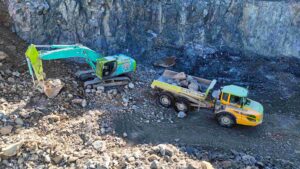
For quarry operators, however, adopting PDS/CPS technology requires solutions that are bespoke to the realities of their operating environments. Quarries typically have confined working areas where heavy haul trucks, excavators and light delivery vehicles (LDVs) frequently interact, creating complex traffic patterns.
In these conditions, conventional PDS or CAS technologies can generate frequent nuisance alarms as vehicles repeatedly enter and exit detection zones. This can lead to ‘PDS fatigue’, where operators become desensitised to constant alerts and may disregard genuine warnings, ultimately increasing the risk of accidents. As a result, quarry operators are seeking intelligent PDS/CPS solutions that adapt to site-specific traffic flows and operational practices rather than applying a one-size-fits-all approach.
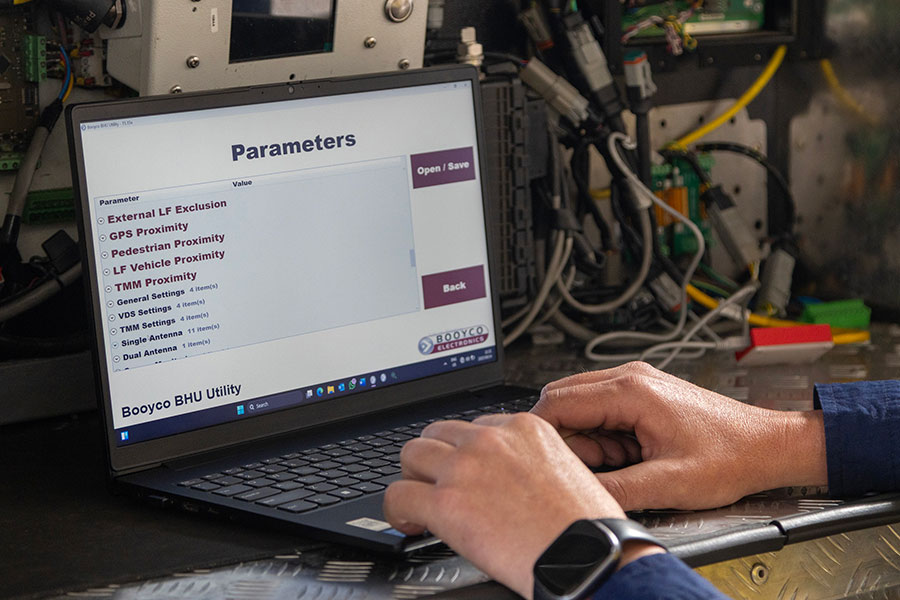
Lourens explains that Booyco Electronics has always recognised that no two operations are the same. From the outset, the company has tailored its PDS deployments to account for the differing requirements of individual sites. Every implementation begins with a detailed assessment of the operation, including its fleet composition, traffic layout and operating practices, ensuring the selected solution is aligned with the site’s specific safety and productivity requirements.
“For the past 20 years, we have endeavoured to closely partner with our customers – whether in quarrying or mainstream mining – through every stage of the PDS/CAS implementation process, ensuring that each site’s unique operational requirements remain at the centre of every installation,” says Lourens. “While we have found that around 80% of the requirements are common across quarry operations, every site has its own unique characteristics, whether it is the mine layout, traffic flow or other operational considerations. That is why every solution must speak directly to the specific needs of the operation.”
Cost considerations
Cost remains one of the biggest considerations for quarry operators when investing in PDS/CPS technology. Unlike large-scale mining operations, quarries typically operate on tighter profit margins, producing bulk aggregates rather than high-value minerals. As a result, they require safety solutions that deliver robust protection while remaining economically viable.
According to Lourens, the Minerals Council South Africa’s Best Practice Guideline, developed through the MOSH (Mining Industry Occupational Safety and Health) Learning Hub, provides a practical framework for implementing PDS technology. The guidelines encourage a phased approach to adoption while placing emphasis on affordability, effective change management and sustainable implementation, making them particularly relevant to smaller operations.
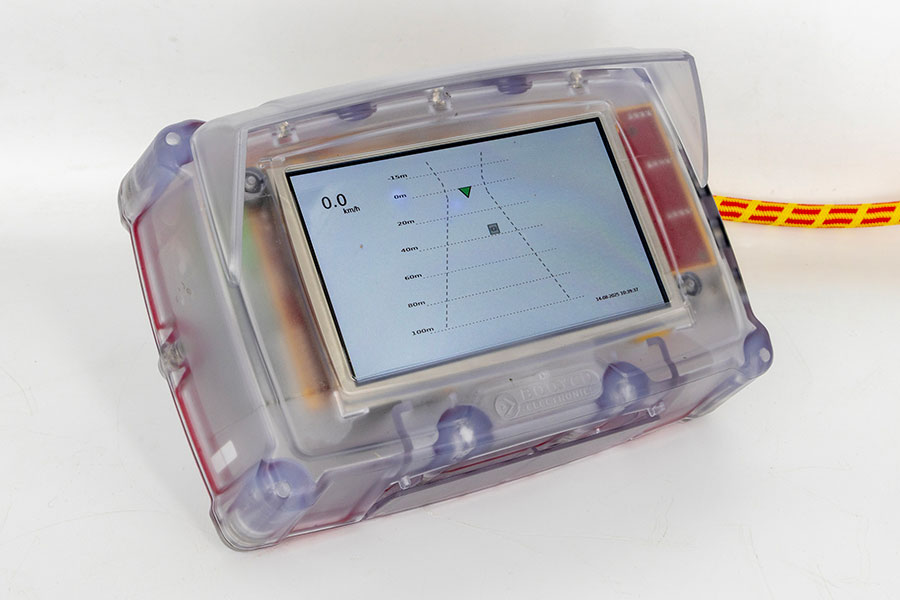
At the same time, Booyco Electronics maintains that safety should never be compromised by the size or financial capacity of an operation. Rather than offering different levels of safety capability, the company has focused on improving its own development and manufacturing efficiencies to make the same advanced PDS/CPS technology accessible to both large mining operations and smaller quarrying businesses.
“Whatever is available for large mining operations is also available to smaller operations such as quarries, with the same capabilities,” says Lourens. “We do not believe there should be a tiered approach to safety-critical technology. Instead, we continually optimise our own efficiencies to reduce the cost of the technology, ensuring our customers – whether large or small – can access the same level of protection.”
Implementation challenges
According to Lourens, every PDS implementation involves balancing the priorities of two distinct stakeholder groups within an operation. On the one hand are engineering teams, whose primary focus is ensuring compliance with safety legislation. On the other are operational managers, whose priority is maintaining productivity and minimising disruptions to production. Aligning these sometimes competing priorities is often one of the biggest challenges during implementation.
“The best way to overcome this challenge is through communication – bringing both parties together to develop a shared understanding of the operation’s unique requirements,” says Lourens. “It is about demonstrating how the chosen solution addresses both engineering and operational needs, delivering legislative compliance without compromising productivity.”
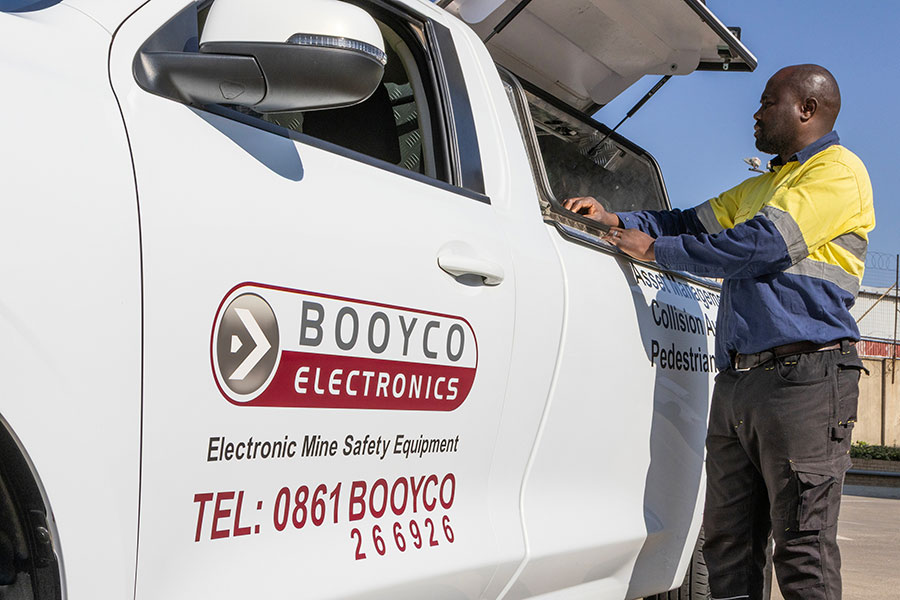
Another common misconception, Lourens adds, is that PDS/CPS technology is a one-size-fits-all solution. While some assume that a single system can simply be configured the same across an entire fleet, the reality is that every machine has a unique operating profile that requires a tailored deployment approach.
An articulated dump truck, for example, presents different operational risks and interaction patterns to an LDV, meaning that the PDS must be configured specifically for each type of equipment to deliver effective safety performance without generating unnecessary alarms.
According to Lourens, training and effective change management are critical to the successful rollout of PDS/CPS technology. Too often, he says, new technologies are deployed without considering the human element, resulting in resistance to adoption and reduced effectiveness.
He advocates a comprehensive change management approach that engages all levels of the organisation – from frontline operators and supervisors to engineering teams and senior management – in order to ensure a shared understanding of the technology’s purpose, benefits and impact on day-to-day operations.
Lourens adds that successful PDS implementation delivers benefits that extend well beyond improved safety. When operators understand how the technology works and why it has been introduced, organisations are more likely to achieve higher levels of user acceptance, leading to better equipment availability, improved operational efficiency and sustained productivity.
Clear and consistent communication throughout the implementation process, he adds, is essential to building confidence in the technology, facilitating smoother adoption and minimising resistance to change.
The future
Commenting on the future of PDS/CPS technology, Lourens points out that “we are now living in a technology space” where innovation is accelerating rapidly, and the sector can expect significant developments in the years ahead. He notes that the industry has increasingly recognised that no single technology can provide the perfect solution for every operating environment.
“The future will involve a fusion of multiple technologies. There will be a role for low-frequency, GPS, radar and even camera-based technologies, in the evolution of these systems. Ultimately, to achieve a more mature and effective solution, we need to combine the strengths of different technologies,” says Lourens. “It is therefore important for PDS suppliers and customers alike to embrace these developments as they emerge, ensuring the continued development of sustainable, cost-effective and value-driven solutions that contribute to our customers’ goal of zero harm.”