To give asphalt the durability and performance that national road builders require, the quality and specification of aggregates must never be compromised.
This is particularly important as South Africa invests in road infrastructure to support economic growth. According to AfriSam’s AfriSam Construction Materials Executive – Sales & Product Technical, Amit Dawneerangen, meeting COTO standards for aggregate in asphalt begins with meticulous quarry management.
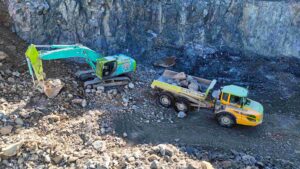
“Having our wide network of well-located quarries with suitable rock is just the starting point for sustainable delivery of quality aggregate,” Dawneerangen explains. “Natural variations in rock require that quarrying is carefully conducted to extract competent and consistent material from the deposit.”
Pre-blasting functions therefore include careful mapping and testing to ensure that material is suitable before it is mined, crushed and screened. Aggregate grading, shape, strength and cleanliness all influence how well a road resists deformation, cracking and long-term wear, he points out.
“Asphalt is far more sensitive to aggregate quality than many other applications,” he says. “This is reflected in the stringent specifications imposed, particularly under COTO standards. It is not possible to substitute lower quality materials and still achieve the required performance.”
Parameters such as Aggregate Crushing Value (ACV), 10% Fines Aggregate Crushing Test (FACT) and Polished Stone Value (PSV) are measured to ensure compliance. This helps asphalt withstand traffic loading, resist abrasion and maintain skid resistance. If aggregates lack sufficient strength or durability, they degrade under load, leading to rutting, ravelling and structural failure.
Nithia Pillay, AfriSam’s Regional Product Technical Manager for Construction Materials, highlights that compliance is not only about meeting minimum thresholds, but about delivering uniformity over time. This demands multiple checks and balances to ensure the right material is consistently delivered into the product stream.
“Non-conforming materials introduce significant risk into asphalt production,” Pillay says. “Excess fines or dust contamination, for example, can compromise binder adhesion and mix stability. Similarly, weak or poorly shaped aggregates can fracture under compaction or traffic, undermining the integrity of the pavement structure.”
AfriSam addresses these requirements through a combination of technical expertise, investment and rigorous quality assurance, with upstream quality control supported by advanced processing capabilities.
“We invest regularly in modern crushing and screening technologies including mobile equipment to give us greater flexibility,” he says. “This allows us to meet increasingly complex and stringent asphalt specifications in the volumes that customers require.”
He notes that collaborative quality assurance adds significantly to confidence across the value chain. AfriSam works closely with asphalt producers through shared testing protocols, pre-approved stockpiles and certified test certificates that confirm compliance before materials leave the quarry. AfriSam quarries conduct quarterly external SANAS accredited testing of inherent material properties for all required parameters ensuring that compliance information is not more than three months old.
“We often test in collaboration with our customers using split samples,” Pillay says. “By the time the material is dispatched, it has already been approved, giving confidence in its quality throughout the process.”
As roadbuilding across South Africa extends into regions not always well served by established quarries, Dawneerangen highlights that AfriSam’s investment in mobile plant is helping ensure that quality aggregate is available to asphalt producers.
“It is not always easy to source the right product nearby when building roads in remote areas,” he explains. “Our wide network of fixed plants is now being augmented by mobile equipment, giving us flexible capacity to boost production while still meeting the stringent asphalt standards and specifications required.”