
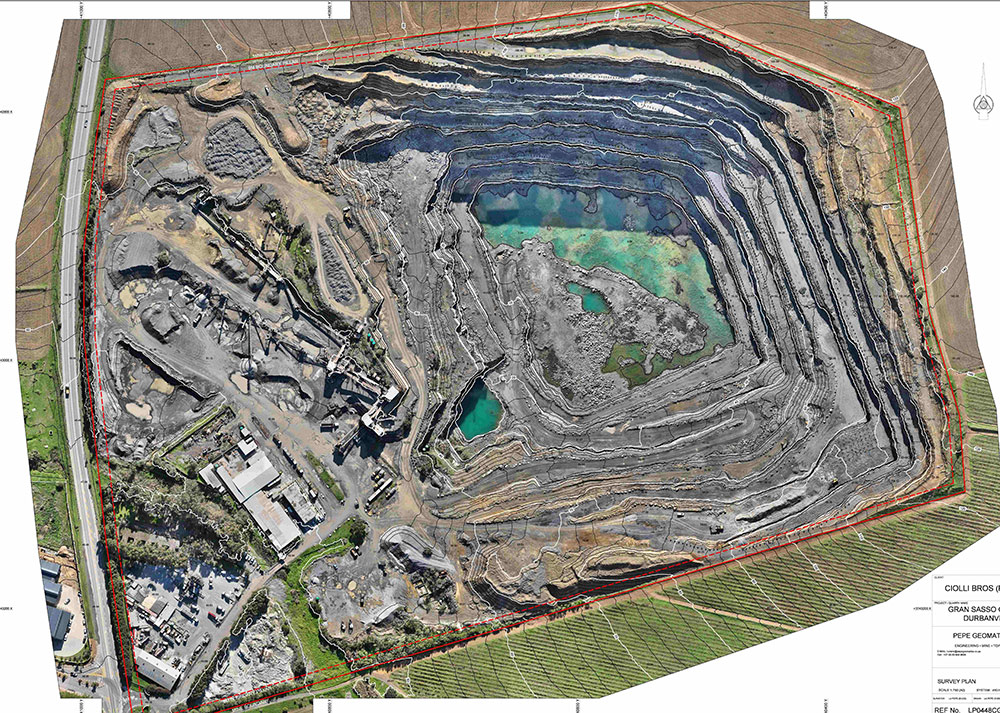
On the back of a hive of construction activity within its vicinity, Durbanville Hills, Cape Town-based Gran Sasso Quarry has in recent years experienced high demand for aggregates. A combination of road projects, property development projects and blockyards, have been central to increased demand for aggregates in the area, confirms Andre Wilson.
In fact, the Western Cape province has been one of the major construction hotspots in South Africa in recent years. To provide context, in 2022, the province accounted for a third of all building plans passed and 40% of all buildings completed in South Africa. In March 2025, the Western Cape, along with KwaZulu-Natal, championed a 23% rise in South Africa’s construction project awards, according to Industry Insight’s Construction Monitor.
The sustained construction activity has translated into a favourable business environment for quarries operating in the province. For Gran Sasso Quarry, which processes a Malmesbury slate (Hornfels) rock, demand drivers to date are largely manufactured sand (-6 mm) and 19 mm concrete stone, G5 subbase material. In fact, current production patterns show that manufactured sand constitutes about 35% of total product sales, confirms quarry manager Tshilidzi Ngobeni.
Another product driving demand is what the quarry terms block mix – a blend of the right amount of dust and aggregate used by block makers in the area. This product, says Wilson, is highly sought after, and some customers send trucks from as far as Gordons Bay and Strand. Other demand drivers are the 9 mm and 6 mm stone, particularly used in asphalt production for road projects.
Need to boost production
On the back of high aggregate demand, Ciolli Bros is investing in a major plant upgrade to boost production capacity for Gran Sasso Quarry.
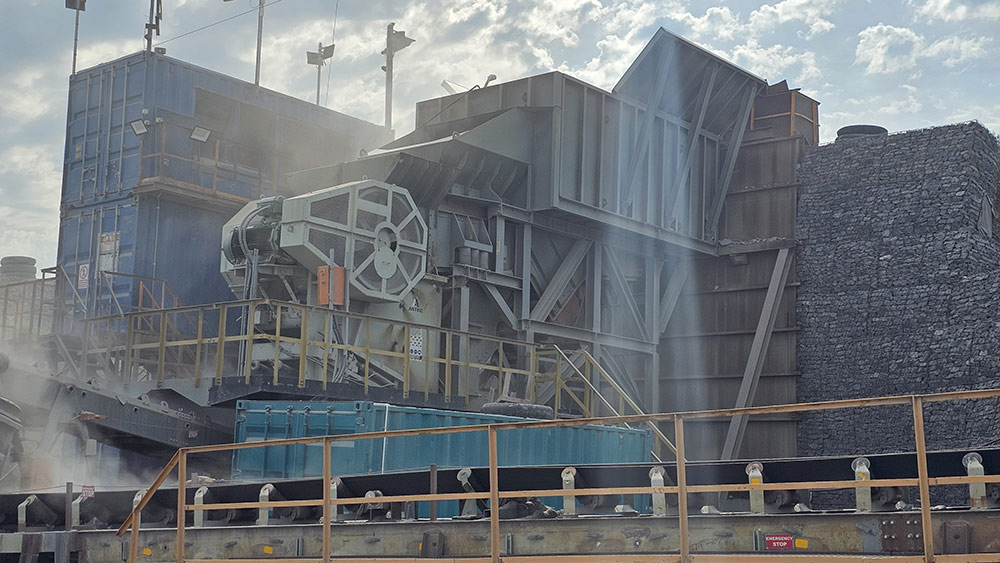
In fact, the plant upgrade was set in motion with the 2022 upgrade of the primary section of the main plant. This saw the quarry investing in a 3648 jaw crusher with a Gbex vibrating grizzly feeder from Astec Industries. With its 750 tph capacity, the 3648 jaw crusher was a major upgrade to the existing 3042 which, to date, still forms part of the two primary sections of the main plant.
“The 3648 was installed to increase production capacity to meet rising demand. However, the increase in capacity at the primary jaw crusher only means that we have created bottlenecks down the line. We are currently running the jaw at 40% of its capacity due to the constraints downstream the plant. Due to the 3638’s ability to put such a huge quantity into the system, we therefore need to upgrade the rest of the plant to maximise its capacity,” says Wilson.
For this upgrade, Astec Industries is the preferred supplier. In fact, Ciolli Bros has traditionally been a firm proponent of the Astec brand, way back from the Osborn days. Gran Sasso Quarry runs a large fleet of Astec comminution equipment within its two plants.
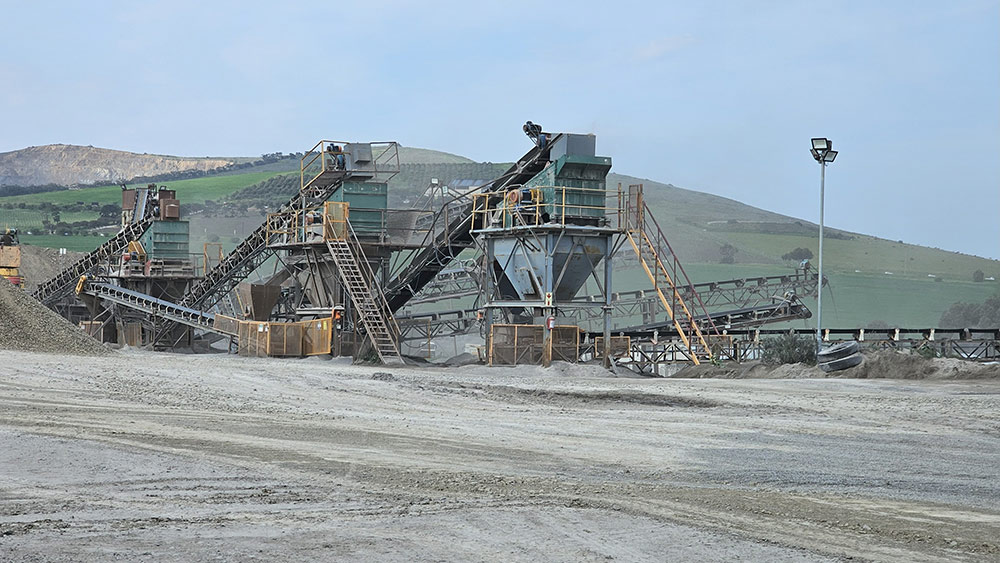
In addition to the new jaw crusher, says plant manager Renier van Rooyen, the old 3042 jaw crusher with its 42×16 vibrating grizzly feeder have been kept as a standby primary section. The plant also constitutes a total of seven Astec screens, namely a 6×16 triple deck Vibroking screen, two 5×14 triple deck screens, two 5×14 double deck screens, a 5×12 double deck screen and a 4×10 triple deck screen. The subbase plant runs with a 2536 Jaw Crusher and a 36 Cone Crusher.
Through Astec’s simulation technology, both Ciolli Bros and Astec will be able to determine the type of upgrade required for the plant to meet the targeted 450 tph capacity. Simulation is an engineering tool for virtually exploring and testing new possibilities. By investigating capacity needs virtually, Astec engineers can more swiftly identify the equipment needed for the upgrade, says Robert Shead, regional aftersales manager – Western and Eastern Cape at Astec.
Why Astec?
Commenting on why Astec is the preferred comminution equipment supplier, Wilson says the original equipment manufacturer (OEM) has proven that it makes quality equipment which lasts longer. “The longevity of Astec equipment, especially jaw crushers, is unmatched in this industry. For example, our 3042 has been running for more than 30 years, while the 2536 has been here for just over 15 years. The longevity of their equipment bodes well for quarries, especially in an environment where capital investments are hard to come by,” says Wilson.
To be successful in today’s quarrying environment, says Van Rooyen, quarries need to consider working with OEMs that supply competitiveness, not just equipment. “Leveraging over 100 years in this game, Astec understands the technical requirements of its customers, allowing them to tailor solutions to each customer’s unique operational needs. For example, when we bought the 750-tph 3648 jaw crusher, we needed to scale it down to match the capacity of the rest of the plant, and Astec engineers were quick to design a special liner for us to be able to do that,” says Van Rooyen.
Another big factor in choosing Astec, says Wilson, is the company’s proven aftermarket support capabilities, from OEM parts supply to technical support.
Local production matters
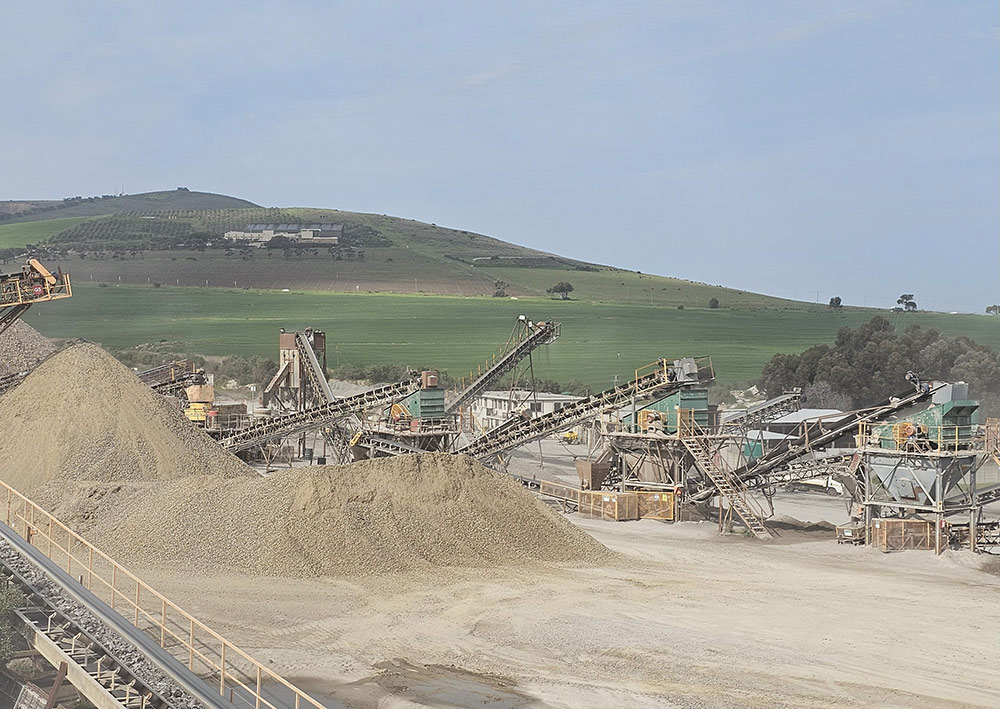
Given that Astec manufactures locally, says Van Rooyen, the resultant quick lead times, both from a capital equipment and parts perspective, bode well for Ciolli Bros’ operational requirements. “We are also impressed by Astec’s focus on technology. For example, back in the day, it was just a mission to adjust the closed side setting (CSS) on a crusher. As someone who is in charge of the mechanical side of the business, one of key features that I like most is the hydraulic dual wedge CSS adjust, which eliminates manual shims and provides quick adjustment and enhanced safety. The ability to adjust on the fly increases production every time an adjustment is needed,” says Van Rooyen.
Astec’s Shead, who looks after Ciolli Bros, is impressed by how the company places value on OEM support. “Ciolli Bros is a company that is OEM-orientated – they request for OEM parts and technical support because they understand how crucial it is for them to keep machines running all the time. Buying an aftermarket part is a big risk factor because downtime is out of the question, especially given the busy nature of their operations. Based on the alignment of our values, we have therefore built a closely-knit relationship with them over the years, and we intend to keep it that way for the long haul,” concludes Shead.


