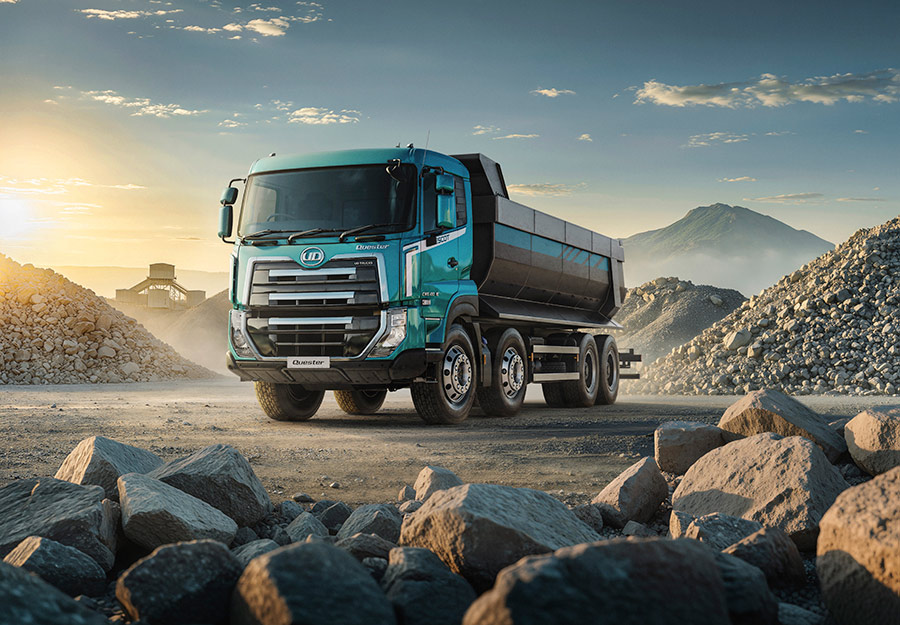
As economic pressures and market volatility continue to shape the transport industry, UD Trucks Southern Africa has identified TPOL as a strategic focus area to enable truck owners to run profitable organisations in the face of unpredictability.
Speaking at this year’s UD Trucks Media Engagement attended by Quarrying Africa, Filip Van den Heede, MD of UD Trucks Southern Africa, stressed that profitability is the difference between simply driving a truck and running a sustainable business that can withstand market volatility for the long haul.
Traditionally, one of the foundational metrics in the day-to-day running of a fleet-driven business has always been TCO. UD Trucks’ approach, says Van den Heede, looks beyond TCO and places value on total profit over the lifetime of an asset because TCO is just a measure of operational expenses, whereas TPOL measures revenue generation – a better indicator of operational success in a high-cost industry. Central to TPOL is not just costs, but also uptime, which impacts productivity.
TPOL in detail
Sanjay Naipal, Aftermarket Director at UD Trucks Southern Africa, tells Quarrying Africa that TPOL is a measure of profitability over the entire lifetime of the asset – be it during the period the customer finances the truck, or over an extended period (that is if they choose to run it beyond the financing period).
According to Naipal, key drivers of TPOL can be grouped into two. On the one hand, it is the cost aspect – a combination of the capital cost of the vehicle, cost of the trailer, insurance, fuel, maintenance and resale value.
To better manage these costs, the industry has traditionally cast the spotlight on TCO – a comprehensive financial estimate that calculates the total cost of an asset over its entire lifecycle, combining the initial purchase price with ongoing operating, maintenance, and disposal costs. “When it comes to TPOL, cost is one aspect of the equation,” says Naipal.
On the other side of the profitability equation is asset utilisation – keeping the truck on the road. Maximising truck uptime is the cornerstone for ensuring high productivity and ultimately profitability in the transportation industry. A vehicle that is consistently available minimises the high costs associated with unexpected breakdowns, costly emergency repairs or rentals, and potential reputational damage.
To provide context, Naipal says that, based on a UD profitability model, the cost of running a typical long-haul truck can amount to about R318 000 per month, including finance instalments, insurance, fuel, licences, driver remuneration, toll fees, and maintenance, amongst others. Working on a typical margin of 4-8% over the 52 weeks in a year means that only four weeks is dedicated to profit making, with the rest of the time being about paying for the truck and the related operational costs.
“Given this scenario, if the truck stands for one week in a year, 25% of the profit is gone,” says Naipal. “Four weeks of downtime can wipe out the customer’s profitability for the year. There is generally a big focus on the cost side, which is understandable, but equally important is uptime, a critical metric in achieving TPOL,” explains Naipal.
Uptime drivers
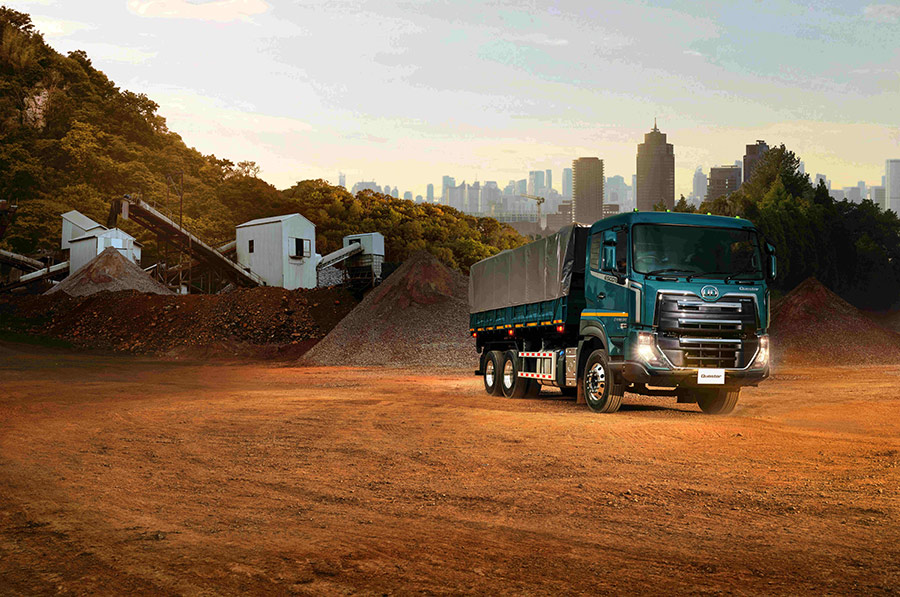
That the quality of the vehicle is a foundational parameter to ensuring it remains on the road, rather than sitting in a repair shop, is no overstatement. However, Naipal cautions that, beyond quality, there are other key drivers in maximising uptime. These include a strong dealer footprint, parts availability, proactive maintenance planning and connected services for data-driven decisions, amongst others.
“Uptime is not solely determined by the quality of the vehicle. It is also influenced by the original equipment manufacturer’s (OEM’s) dealer footprint. For example, driving 200 km to get to the nearest dealer represents lost time and unnecessary fuel costs, which reduces the truck owner’s shot at profitability,” says Naipal.
On the back of this understanding, UD Trucks Southern Africa continues to invest in its dealer network, recognising that strong retail environments are critical not only to uptime, but also customer experience. The OEM has a network of 40 dealers in South Africa alone, with a further 15 in the rest of the region, stretching up to Kenya.
Recent milestones in dealer development include the opening of CMH Commercial Pinetown’s new dealership; the McCarthy Commercial Boksburg dealership upgrade, enhancing service capability; as well as a major expansion at McCarthy Commercial Alrode, increasing workshop and parts capacity. Additional facility improvements are underway in Richards Bay, Worcester, Kimberley, Bloemfontein and Port Shepstone, confirms Naipal.
Having a strong dealer network is one thing, but availability of trained personnel to perform the necessary services is quite another. UD Trucks Southern Africa places a strong emphasis on dealer development through extensive investment in training. To provide context, a total of 2 799 dealer staff was trained in 2025, with a further 27 receiving leadership development training.
Parts availability, he adds, is another critical element of maximising truck uptime, directly influencing how quickly a vehicle can return to service following maintenance or unexpected failure. UD Trucks Southern Africa maintains 97% parts availability.
“We measure our parts availability against the orders placed,” explains Naipal. “If an order comes and is immediately fulfilled, it is categorised as a ‘one’. If a parts order is not fulfilled, it is marked as a ‘zero’. A 97% parts availability therefore speaks volumes about our commitment to customer uptime and profitability.”
Data-driven decisions
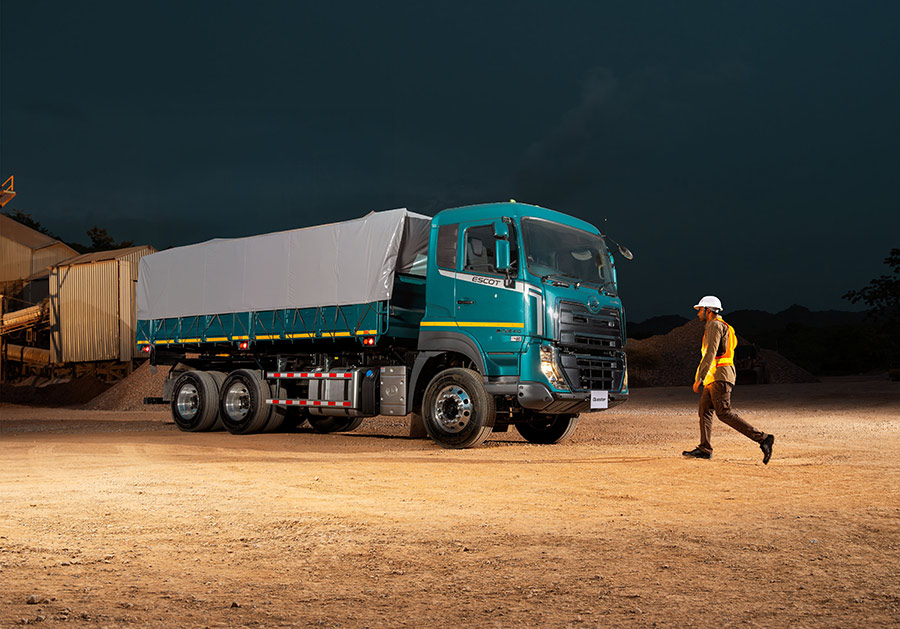
The importance of data-driven decisions in maximising truck uptime cannot be stressed enough, says Naipal. Through UD’s Connected Services such as My UD Fleet, truck owners have a ‘pulse’ on their mission-critical assets. With easy navigation, data analytics and powerful tools at their disposal, they have everything they need to manage their assets and maximise profitability.
My UD Fleet, a UD in-house developed platform, has over the years evolved beyond just a fleet management solution to include other third-party features unique to the local market. For example, fuel theft is a major concern for any fleet operator in South Africa and the region at large. In response, UD Trucks Southern Africa has installed an anti-siphoning device which employs a ball valve principle to prevent fuel theft.
Another notable addition coming to My UD Fleet this year is the camera system for better safety and driver management. The system will help fleet managers detect driver fatigue, distractions and speeding, in real time. The camera system, adds Naipal, will also come in handy in incident investigation by providing objective, high-definition video evidence of events before, during, and after an accident, which helps determine liability and protects companies from false insurance claims or staged accidents.
As part of its Uptime 2.0 strategy, UD Trucks Southern Africa is testing an Artificial Intelligence (AI) platform – a proactive workshop programme for breakdown prevention. Trucks, says Naipal, already produce a lot of data, which will be fed into the AI platform that keeps learning, and predicts breakdowns based on fault codes or diagnostic trouble codes provided.
“We are currently in the testing phase with the AI platform. We started with three customers, but we realised that there were not enough fault codes in those fleets from which the platform could learn. We have therefore expanded it to all our Service Agreements customers, which gives us a bigger pool of trucks and fault codes to analyse. Once we get the data accuracy right, we will then roll it out commercially,” concludes Naipal.