In a rapidly evolving, high-pressure quarrying industry, new solutions are critical for quarries to remain viable and profitable. As material specifications become stricter and demand for consistent, high-volume output increases, innovative screening technologies are necessary to maximise throughput and profitability.
With that in mind, Multotec will use the upcoming 55th IQSA Conference and Exhibition – to be held at the Elangeni Hotel in Durban, South Africa, on 16-17 April 2026 – to showcase solutions that are designed to usher in a new era in screening efficiency.
Two products
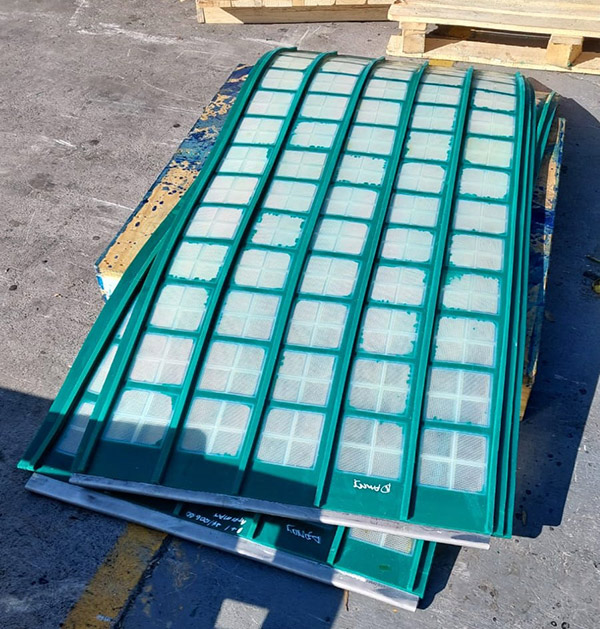
Multotec will be showcasing two new products that are, however, still in the testing phase – the End Tension PU Mat and the Side Tension Rubber Mat. Together, says Uys, these products are designed to improve screening efficiency, reduce recirculating load and minimise the need for manual intervention, ultimately lowering operational costs.
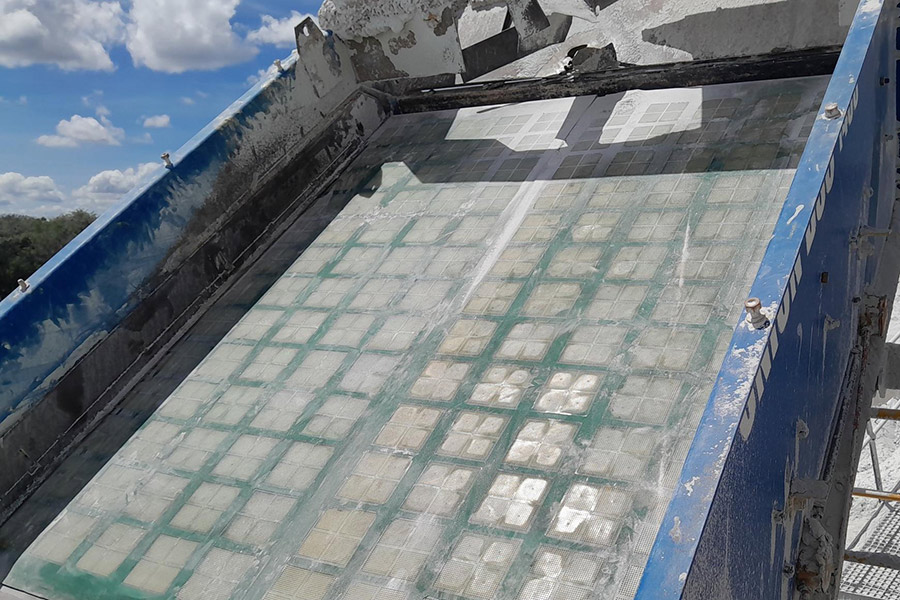
Designed for high-frequency screens, the End Tension PU Mat tensions from the top to the bottom of the screen. Uys tells Quarrying Africa that this mat has shown excellent results in limestone quarries during the initial phase of testing, improving underflow tonnage and reducing recirculating load.
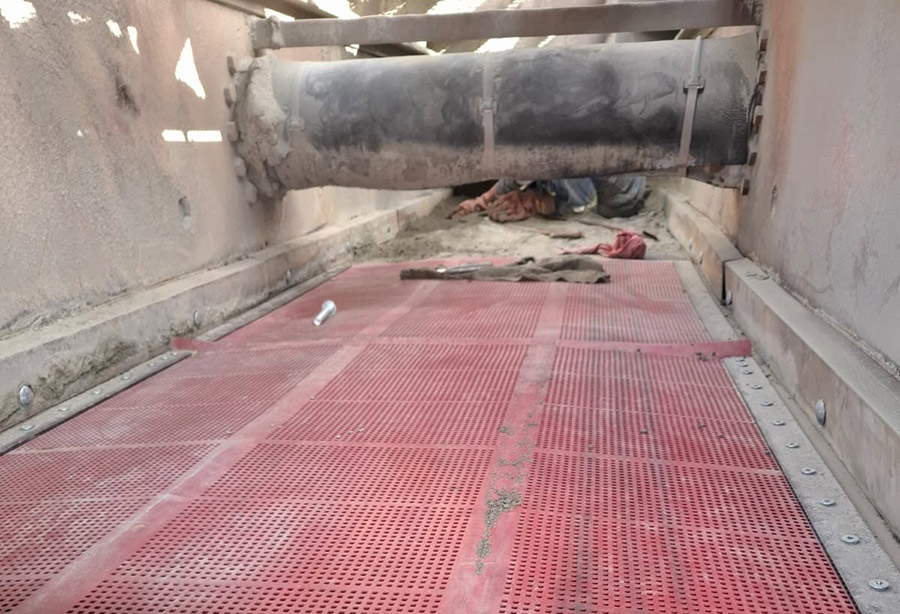
The Side Tension Rubber Mat installs the same way as the traditional woven wire mesh and comes in apertures from 4 mm to 40 mm, and thicknesses of 6 mm to 12 mm, depending on the application. It has been particularly effective in addressing blinding in tertiary applications.
“These products specifically address a key challenge many quarries face – blinding in tertiary applications when wet, sticky, or fine materials clog the screen mesh, filling the apertures (holes) in the screening media,” explains Uys.
“While some of our solutions, such as soft rubber panels, high-flow panels, vibroplast panels and flapper panels, have been available for some time, we have made significant advances in side tension solutions designed to replace woven wire mesh without requiring costly deck conversions. These mats have become increasingly common but remain a significant capital investment for quarries,” he adds.
In addition, Multotec will continue testing the Side Tension MBV Mat, which was featured at the last 2025 IQSA exhibition. The product is moving into a second phase of testing and has delivered strong results in addressing blinding.
Key features and benefits
Commenting on some of the features and benefits, Uys says the main advantage of these three solutions is that they are self-cleansing. They are engineered to be ‘alive’ in operation, vibrating with the screen’s mechanics to maintain a clean surface, unlike rigid woven wire mesh.
Another key benefit is the extended lifespan. Polyurethane and rubber surfaces are smoother and have lower friction than woven wire mesh, allowing product to flow freely and reducing wear and tear.
From a health and safety perspective these mats are made of smooth materials, with fewer sharp edges than woven wire mesh, reducing the risk of injury during installation or maintenance. In addition, this significantly reduces noise levels.
The modular design of the MBV side tension mats is another major benefit. Sections are cast in 305mm units from side plate to side plate. This modularity allows for targeted replacement in case of damage, reducing downtime compared to conventional screening media that requires complete replacement or patching.
“Overall, these products enhance efficiency, reduce labour costs and improve safety, while ensuring more consistent screening performance, ultimately translating into improved plant uptime and lower maintenance requirements,” says Uys.
Industry trends
Commenting on some trends emerging in the quarrying sector, Uys makes special mention of the growing focus on long lifespan of screening media in primary applications. Traditional screening media, he says, often wears out too quickly, leading to frequent replacements and downtime.
Blinding in tertiary (and some secondary) applications is a common industry setback. “Fines can accumulate on screens, preventing sellable product from passing through. In many operations, this results in frequent plant stoppages for manual cleaning, thus increasing labour costs and significantly reducing overall plant efficiency. This also leads to recirculating loads, inefficiencies and higher energy costs,” explains Uys.
Quarries, he says, are beginning to recognise the need for solutions that address these issues at the root, rather than just managing the symptoms.
Multotec approach
Multotec’s approach to addressing these trends is solution-driven. “We focus on research and development (R&D) to understand specific operational challenges and design products that directly address them,” says Uys.
The process typically involves testing new ideas in the company’s R&D facility in Spartan, implementing operational trials at live quarry sites, and refining products based on real-world feedback, which can include improvements in lifespan, self-cleansing efficiency, or material and aperture design.
“The R&D focus allows us to proactively address emerging trends, ensure our solutions deliver measurable benefits and maintain a competitive edge in the screening media space. This ensures that the solutions we bring to market are not only technically sound but also deliver measurable improvements in efficiency, cost reduction, and overall plant performance,” says Uys.

Holistic approach
While the company has been heavily focused on screening media solutions, Multotec is also expanding its holistic approach to the quarrying process. For example, the company has added new slurry pumps and cyclones, as well as ceramic wear solutions. “We have introduced new wear solutions and cyclones that have proven successful in various quarries,” says Uys.
These products are backed by end-to-end technical support. Multotec considers the full process flow, helping clients identify upstream adjustments that can prevent downstream issues.
“This broader perspective allows us to offer a complete package of solutions, combining innovative products with technical expertise to improve overall plant efficiency. Furthermore, this holistic approach enables us to move beyond solving isolated challenges and instead optimise the entire process, delivering long-term value and improved operational performance for our customers,” concludes Uys.