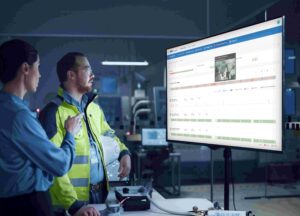
As digitalisation and automation continue to take root in modern mining and quarrying operations, the importance of fit-for-purpose sensors to achieve the desired transformation cannot be stated enough. Sensors play a crucial role by detecting and measuring a variety of parameters such as temperature, pressure, humidity, flow rate, motion and position.
On the back of this digital and automation drive, the uptake of industrial measuring devices in African mining is clearly accelerating, confirms Petersen. Adoption, he says, started with critical liquid and bulk-solids applications (silos, hoppers, tanks and thickeners) and is broadening into predictive maintenance and remote process control as connectivity and on-site digital skills improve.
“While projects can be phased and conservative in procurement, we are seeing faster replacement cycles for legacy instrumentation as operators prioritise reliability and data quality to reduce downtime and operating cost,” says Petersen.
Market drivers
In terms of uptake, Petersen says non-contact radar level sensors (VEGAPULS family) are the clear market drivers to date. They deliver reliable, maintenance-free level measurement across liquids and bulk solids under dusty, high-temperature and abrasive conditions that are common in mining.
“Pressure transmitters and guided wave radar technology are also incorporated in applications that require pressure or interface measurement. The combination of long measuring ranges, immunity to dust/fines and digital outputs that integrate into control systems makes these technologies the practical backbone of mine automation,” explains Petersen.

Key trends
As a leader in the measuring device market, VEGA has observed a number of key trends shaping the market to date. One of them is the strong shift to compact, higher-frequency (80 GHz) radar devices that give tighter beam focusing and improved signal stability in dusty or difficult geometries. VEGA remains the leader in radar technology innovation.
“We have also observed a move from purely local analogue instruments toward devices that supply digital data and diagnostics for condition-based maintenance and remote monitoring,” says Petersen.
Other emerging trends include the growing demand for simpler, lower-cost radar devices for routine applications alongside premium, Safety Integrity Level (SIL)-capable sensors for safety-critical points, as well as the growing interest in sensors that are rugged, intrinsically low-maintenance and easy to commission in remote sites.
Commenting on the drivers behind these trends, Petersen says several forces converge: cost pressures and the need to reduce operational downtime; the industrial drive to centralise monitoring and extract value from data (better process control, fewer overfills/spills); safety and environmental regulation; and the expansion of remote operations where local maintenance is limited.
“In addition, technological improvements – smaller, cheaper radar chips and better signal processing – have made high-performance sensors accessible to more applications, so mines are replacing reactive fixes with dependable instrumentation that supports digital workflows,” says Petersen.

Response to trends
In response to these emerging market trends, VEGA has matched product development with operational realities – delivering compact 80 GHz radar and universal radar solutions that are easy to install and commission; certifying and ruggedising instruments for mining environments; and ensuring digital interoperability so sensors feed control systems and condition-monitoring platforms reliably.
Equally important, says Petersen, is support, technical application advice, training and aftersales service, so that mines can implement sensors as part of a stable, reliable data-driven process. VEGA’s portfolio deliberately spans both cost-efficient BASIC radar products for standard applications and “Pro” devices for demanding or safety-critical tasks, such as the versatile VEGAPULS 6x radar sensor, which can measure liquids and solids in virtually all level applications.
“I believe that VEGA has positioned itself at the forefront of transformational measuring instrumentation and sensors within the mining sector. With decades of expertise and a strong presence across African mining operations, we continue to set the benchmark for reliability and innovation,” stresses Petersen.
To the future
Commenting on some of the key future developments that are likely to take root in the measuring devices market, Peterson expects the continued roll-out of compact, focused-beam radar models and variants tuned for bulk solids, plus more safety-certified and cybersecurity-aware instrument versions for industrial networks.
“We will also see broader availability of affordable ‘BASIC’ radar units for high-volume, routine silo and bunker applications, as well as sensors with richer diagnostic outputs to support predictive maintenance and remote commissioning. These are all aimed at delivering better measurement confidence with lower lifecycle costs,” he says.

The foundation
In conclusion, Petersen stresses that good measurement is the foundation of good decisions. For quarry and mine operators, the trick is to treat sensors as commodities; the reality is that selecting the right sensor family, mounting and signal configuration pays for itself quickly through avoided downtime, safer operations and cleaner environmental compliance.
“We encourage operators to partner with their instrumentation supplier early in the project lifecycle, so that site realities, such as dust loading, vessel geometry and product properties, can be factored into the measurement solution. At VEGA, we combine proven products with local application support to help African mining customers convert measurement data into a reliable operational advantage,” concludes Petersen.