South Africa’s mining future depends on more than its mineral wealth. The industry must address the environmental, social, skills and economic challenges inherited from generations of mining while building a more sustainable future.
This challenge framed the Wits Mining Institute’s (WMI) “From Legacy to Leadership: Shaping Sustainable Mining Futures” seminar, held on 8 October 2026 at the University of the Witwatersrand. Bringing together industry, academia, government and community, the event explored mining’s legacy challenges, skills and youth, technological modernisation, and critical minerals in the context of a just transition.
The central message was clear: progress requires collaboration, practical innovation and leadership that turns commitments into action.
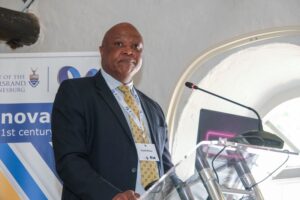
In his welcoming address, Professor Cuthbert Musingwini, Dean of the Faculty of Engineering and the Built Environment at Wits University, emphasised that mining’s complexity demands collaboration across institutions and disciplines.
WMI draws expertise from five Wits faculties and collaboration remains central to this work and achievement. As an example, he highlighted the ENERGISE Centre for Just Energy Transition connects Wits with the Technical University of Munich and three South African universities to advance research and innovation in support of a just energy transition.
“However, collaboration must produce measurable outcomes,” he says. “Will it generate joint research, create opportunities for postgraduate researchers, produce technologies with societal impact and ultimately help shape a more sustainable mining industry?”
For Musingwini, success depends on what these partnerships deliver beyond the seminar.
WMI Director, Professor Pontsho Twala, positioned the seminar as a platform for turning dialogue into practical solutions. “Its purpose is to turn dialogue into evidence, evidence into partnerships, and partnerships into action,” she says.
The WMI grew out of a need to address mining’s technological, environmental and socio-economic challenges through multidisciplinary research and collaboration. Following the establishment of specialist research centres from 2005 onwards, the WMI was formally launched in 2016, bringing academia and industry together to advance responsible mining.
“The seminar continued this tradition, with WMI’s work supported by anchor sponsors Sibanye-Stillwater and South32, as well as technology partners Schauenburg Systems and RAMJACK Technology Solutions, the Mandela Mining Precinct and the Mining Qualifications Authority (MQA) contributing to collaboration, technology development, research and skills development,” she says.
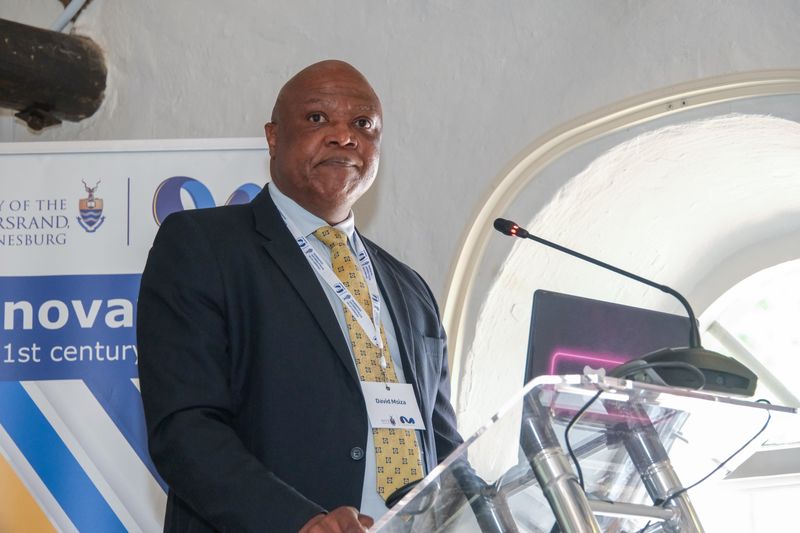
David Msiza, Chief Inspector of Mines at the Department of Mineral and Petroleum Resources, delivered the first keynote address, highlighting the responsibility to safeguard South Africa’s mining legacy.
“We should be proud of our legacy,” he says. “However, we also need to ensure that we secure it.”
This requires responsible investment, modernisation, skills development, beneficiation and zero harm. “Mine closure planning must also begin while operations are active,” he says, emphasising collaboration between government, industry and organised labour, alongside a willingness to challenge established thinking.
Delivering the second keynote address, Alex Fenn, VP of Technology and Innovation at Sibanye-Stillwater, demonstrated how diversification and practical innovation can strengthen mining’s long-term resilience. Established as a South African gold miner in 2013, the company has expanded into a global, multi-metal producer and recycler operating across five continents.
“Our portfolio spans gold, platinum-group metals, chrome, zinc and battery metals, including lithium and nickel, diversifying exposure across commodity markets and the energy transition,” he says.
In 2025, renewable energy projects generated 293GWh of clean electricity, avoiding 316 875 tonnes of CO₂ emissions and delivering R93 million in energy savings. Digital twin technology reduced electricity consumption by a further 120.1GWh, preventing 124,935 tonnes of CO₂-equivalent emissions.
“Responsible water stewardship remains a major focus,” he says. “Water recycling, precious-metal recovery from electronic waste and remining historical tailings can improve resource efficiency while addressing environmental legacies.”
Moderated by Wits University Head of Society, Work and Politics Institute, and Senior Researcher, Dr Dineo Skosana, a panel on mine closure, environmental rehabilitation and community impact explored the gap between South Africa’s closure obligations and their implementation.
Abandoned mines, pollution and inadequate rehabilitation threaten communities, while closures can strip local economies of jobs, procurement opportunities and essential services. Poorly managed sites can also encourage illegal mining, exposing people to safety, security and environmental risks.
Solutions include early closure planning, enforcement of environmental obligations, meaningful community participation and stronger municipal capacity. Workers need portable skills to move into other sectors or establish businesses.
With appropriate regulatory frameworks, technical training and safety standards, artisanal mining could provide safer, more formalised opportunities for responsible resource recovery. Local procurement, rehabilitation and responsible remining can also create alternative livelihoods.
A just transition requires government, industry, labour and communities to share responsibility for life beyond mining.
Adjunct Professor Nellia Mutemeri of Wits University’s School of Mining noted that critical minerals offer South Africa a significant opportunity, but mineral wealth alone cannot secure a sustainable future.
“Legacy is what we inherit; leadership is what we choose to do going forward,” she says, calling for action on environmental damage, investment in young people and greater local value creation.
South Africa’s Critical Minerals and Metals Strategy provides a framework for expanding processing and industrialisation. “Realising this potential depends on policy certainty, reliable energy and logistics infrastructure, skills development and investment across the value chain, from refining and recycling to component manufacturing,” she says.
She stresses that workers and mining communities must also benefit. Rehabilitation, responsible remining and environmental management must advance alongside technologies that improve safety and efficiency.
“The strategic choice is whether South Africa remains a supplier of raw materials or develops a more integrated mining economy that creates jobs, builds industrial capacity and retains more value locally,” she says.
Moderated by Isaac Mabala, Lecturer at Wits University’s School of Mining, the technology, innovation and modernisation panel examined how digitalisation, automation, artificial intelligence and real-time monitoring can make mines safer and more productive.
Panellists stressed that technology must solve business problems rather than operate in isolation. Integrating systems and contextualising data can improve operational visibility, cost control and risk management.
Infrastructure constraints, capital pressures and uneven digital readiness remain barriers. Successful adoption also requires change management and skills development, with employees able to understand the technology, trust the data and apply it.
Modernisation delivers value when people, processes and technology work together to improve performance.
Moderated by Nelly Shabangu, Skills and Development and Research Manager at the Mining Qualifications Authority (MQA), the panel on skills, youth and the future of work focused on whether mining is creating meaningful opportunities for young people, challenging the industry to close the gap between its community-development commitments and the realities facing youth.
Young people face poor schooling conditions, limited access to training, experience requirements and few pathways into permanent employment. Meanwhile, automation is changing the skills mines need, raising questions about future jobs and the industry’s appeal to young people.
The discussion called for stronger links between schools, TVET colleges and industry, accessible practical training and sustainable routes into employment. Skills development must also extend into renewable energy, rehabilitation and conservation, with communities and young people having a meaningful voice in decisions affecting their futures.
The challenge is to equip young people for a changing industry and the wider economy, not just the jobs available today.
The seminar concluded with a leadership masterclass, designed to turn discussion into action, encouraging participants to consider how the issues explored throughout the day will influence leadership and decision-making in the mining sector.
Speakers were Bokang Kelepa, a mining engineer, entrepreneur, strategic advisor leading Baletsema Holdings, an advisory board member and a John C. Maxwell-certified speaker, and Mekgwe Mfolo, Managing Executive at Elderberry Consulting Engineers and Triad Water Solutions.
The session reinforced the importance of leadership alongside technical expertise. As mining confronts environmental legacies, technological change and the demands of a just transition, young professionals will need the judgement and adaptability to help shape the industry’s direction.
South Africa’s mining legacy is what we inherit, while the future is what the next generation chooses to build.