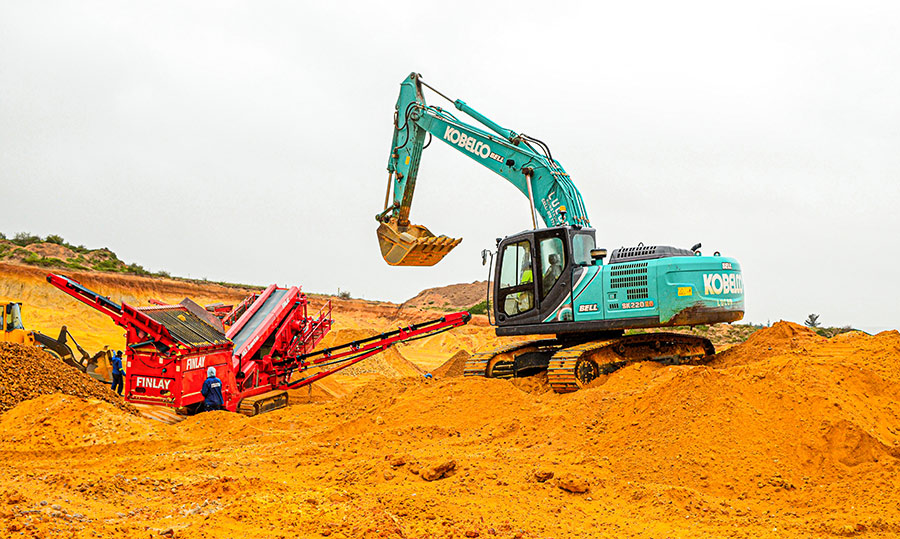
The South African quarrying sector is currently operating with remarkable resilience, navigating deep-seated constraints such as a struggling construction industry, as well as regulatory and financial pressures that hinder optimal growth. Under the topical “Thriving in Uncertainty” theme, this year’s IQSA conference will highlight the industry’s adaptability and resilience in volatile times.
In the quest to thrive in uncertainty, the quarrying industry relies heavily on its supply chain partners to provide solutions that speak directly to their evolving needs and allow quarry operators to keep up with global and local trends.
Astec showcase
At this year’s show, Astec Industries’ exhibit will hinge on three key pillars – local manufacture, mobile crushing and screening, as well as the ‘JOZI Modular Plant System’.
The importance of local manufacture cannot be reiterated enough, explains Calvin Fennell, Business Line Manager Capital Sales at Astec Industries Africa Middle East. The original equipment manufacturer (OEM) operates a major manufacturing hub in Elandsfontein, Johannesburg, South Africa, serving the Africa Middle East region, as well as the global market through Astec’s international footprint, with crushing and screening equipment.
“The Titan T‑Series local production programme is underway in South Africa – starting with the T200 and T300 – to shorten lead times and strengthen regional support. We will also showcase the newly launched A‑Series jaw crushers, with the A50 being the debut model. South African localisation for the A Series is in the pipeline to complement Titan production,” explains Fennell.
Local manufacture in South Africa, continues Fennell, offers shorter delivery and commissioning times, as well as direct access to local spares, service and engineering, reducing downtime and risk for regional quarries. In addition, producing locally improves supply chain resilience against global disruptions while strengthening local community relationships and supporting local skills development.
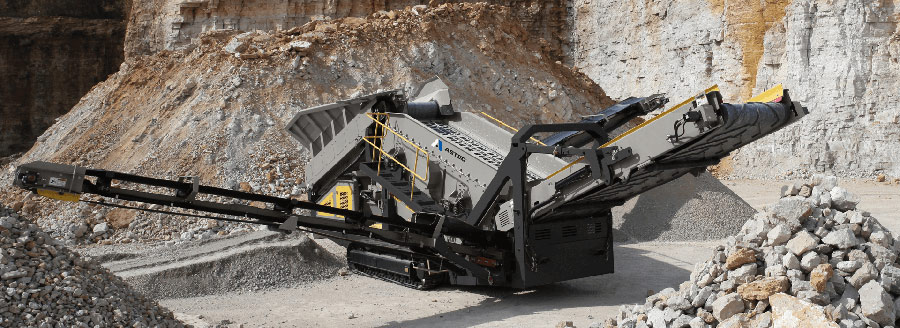
Astec will also use this year’s event to showcase its rapid‑deployment lineup of mobile crushing and screening solutions, including the GT125 tracked jaw, the FT2650 tracked jaw, the GT205 mobile incline screen and the GT165 direct‑feed screen, as well as the FT200 tracked cone crusher. These solutions speak to the growing need for fast time‑to‑production and flexible circuits.
“Our mobile plants combine proven jaw and screening platforms with quick setup and easy redeployment between pits – ideal when geology or demand shifts,” Fennell says.
Another major talking point at the Astec stand will be the ‘JOZI Modular Plant System’ – to be launched later this year.
Bell exhibits
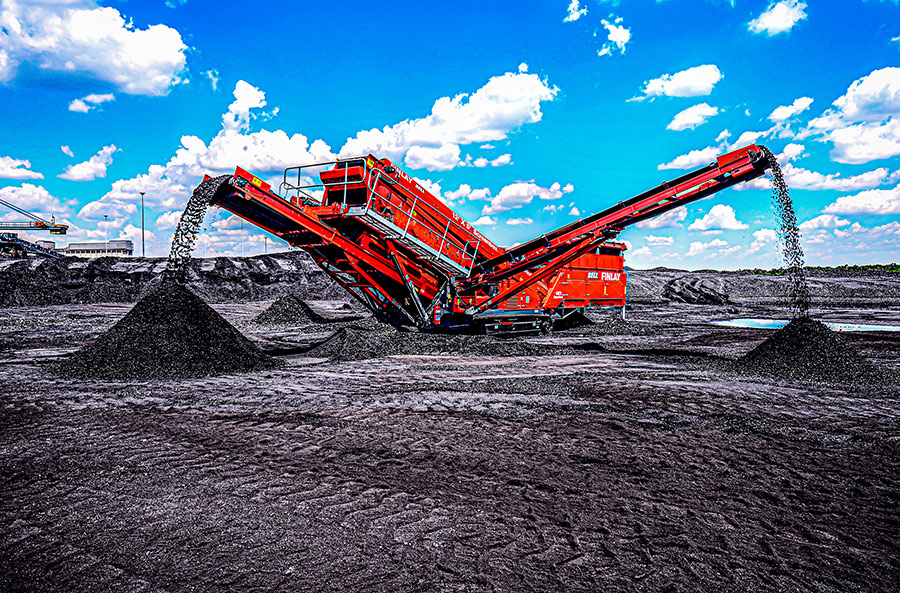
At the 2026 IQSA Conference, Bell Equipment Sales South Africa (BESSA) will cast the spotlight on its Finlay mobile crushing and screening range, Bell articulated dump trucks (ADTs) and Kobelco excavators.
“Together, these solutions provide a complete end-to-end system for quarrying operations – from extraction and loading to hauling and processing – helping customers improve productivity, efficiency and cost per tonne,” says BESSA OEM Manager Geran Lazarus.
Finlay mobile crushers and screens offer high throughput, efficient material separation and reduced cost per tonne, while Bell ADTs are renowned for their fuel-efficiency, stable operation and capability to handle challenging terrain.
Kobelco excavators provide fast cycle times, high breakout forces and fuel-efficient hydraulics. Collectively, says Lazarus, these solutions help operators boost production, reduce costs and improve reliability across every stage of operation.
“We go beyond supplying equipment. By combining Finlay, Bell and Kobelco with expert advice, training and support, we ensure the right machine for the right application, helping quarries increase output, reduce waste and improve long-term profitability,” says Lazarus.
Key trends
Commenting on some trends taking root in the quarrying market, Lazarus notes that quarries are placing a major focus on material optimisation – maximising usable product and reducing waste. Material optimisation in quarries focuses on maximising the extraction and utilisation of valuable material while minimising waste.
“The advent of data-driven operations – using telematics to track performance and uptime – is one of the major trends we see in the quarrying industry,” explains Lazarus. Quarries are increasingly running data-driven operations, leveraging data analytics and insights from various sources to optimise processes, predict equipment failures and improve overall efficiency and safety.
With pressure to reduce emissions, manage dust and operate responsibly, quarries are placing a major focus on sustainability, says Lazarus. The strong focus on sustainability ensures regulatory compliance, reduces operational costs and secures the industry’s “social licence to operate” within local communities.
“In response to these trends, we strive to provide customers with a complete view of the total cost of ownership across our product range. We provide and support world-class telematics and monitoring systems to improve uptime and decision-making. We also make use of pre-screening and integrated processing to maximise yield,” says Lazarus.
Pivoting to mobile
According to Astec’s Fennell, African producers are pivoting to mobile and modular solutions to compress project timelines and de‑risk capex. At the same time, operators are doubling down on efficiency, safety and skills.
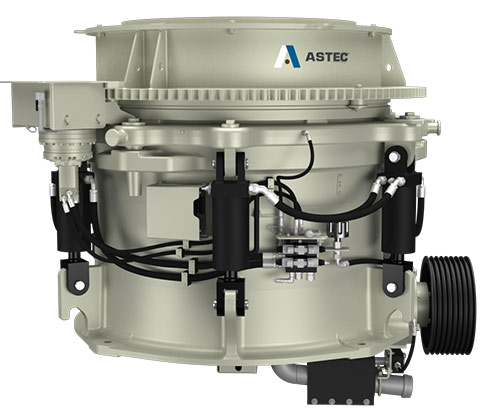
“To respond to these emerging requirements, we are expanding local manufacturing capabilities, with the Titan T‑Series now already produced in South Africa and the A‑Series jaws planned to join soon. We are also standardising our modular designs to speed up delivery and relocation. In parallel, our GT/FT and Ranger mobile trains help customers cut re-handling, optimise energy use per tonne and scale easily in line with demand,” concludes Fennell.