As part of its plans to reduce environmental impacts, Babcock Africa partnered with the National Cleaner Production Centre South Africa (NCPC-SA) to conduct resource-efficient and cleaner production (RECP) assessments across selected priority sites in South Africa, focusing on energy, water and waste management. Following this process, the company has embarked on an implementation programme that begins with low- and no-cost interventions, with notable early successes.
In today’s business world, environmental stewardship has shifted from a statutory requirement to a strategic necessity. With this in mind, the Babcock International Group is advancing its ‘Plan Zero 40’ ambition to transition to a net-zero emissions organisation across all operations by 2040. The company is an inaugural signatory of the UK Defence ESG Charter and has aligned with the Business Ambition for 1.5°C Pledge.
As part of this strategy, responsible resource management is now embedded into products, processes and operations. For Babcock Africa, the immediate priority is to drive sustainable performance across three fronts: energy efficiency, water stewardship and waste reduction.
Through its partnership with NCPC-SA – a national support programme that accelerates South Africa’s transition to a green economy through RECP interventions – Babcock Africa has adopted a systematic and integrated approach to resource management and long-term environmental performance improvement.
The partnership
Babcock International recently published a suite of Environmental Commitments that outline the group’s intention to reduce environmental impact and carbon emissions across its global footprint. To better understand its current position and develop clear improvement roadmaps, Babcock Africa approached NCPC-SA for technical support.
NCPC-SA, funded by the Department of Trade, Industry and Competition (DTIC) and hosted by the Council for Scientific and Industrial Research (CSIR), supports industrial and selected commercial sectors in adopting sustainable, efficient and competitive operating practices.
Lindani Ncwane, Senior Project Manager at NCPC-SA, explains: “Our goal is to support industry transition toward green economy through resource efficiency, especially given South Africa’s reliance on coal-based energy. Through our collaboration with Babcock Africa, we provided technical expertise and highly subsidised financial support to conduct RECP assessments at priority sites to identify opportunities to save water and energy and reduce waste generation.”
Kea Tlhapane, Environmental Lead at Babcock Africa, adds that the partnership was established to proactively address environmental impacts. “Water assessments focused on high-consumption sites exceeding 1 million litres, while waste assessments initially prioritised operations generating more than 100 tonnes of waste. This allowed us to focus on the areas with the highest potential for improvement.”
The process
The RECP programme consists of two phases: detailed assessments and the implementation phase, which is currently underway.
The process began with engagement between Babcock Africa’s senior leadership and NCPC-SA’s executive team to confirm project scope and alignment with NCPC-SA’s mandate. Once alignment was confirmed, independent RECP experts—appointed and funded by NCPC-SA—conducted detailed technical assessments.
Working closely with Babcock SHE specialists, these experts observed operations, collected resource-use data, established baselines and identified opportunities across energy, water, material efficiency and waste streams at each priority site.
Draft reports included identified initiatives, action plans, estimated savings, ROI and payback periods. Final reports incorporated Babcock’s feedback and included implementation guidance and monitoring recommendations.
Initiatives
The RECP reports identified three categories of opportunities:
- No-cost interventions
- Low-cost interventions
- Medium to high investment interventions
Babcock Africa has begun implementing the no-cost and low-cost initiatives and continues to evaluate medium- to high-investment opportunities. Importantly, NCPC-SA initiated a follow-up meeting after reviewing Babcock’s early progress and, impressed by the company’s self-funded implementation efforts of more than R500 000, offered additional technical support funding to accelerate further initiatives.
Lindani and the NCPC-SA team expressed strong encouragement during this review, noting the quality and pace of implementation already achieved using internal resources.
Water management
Water-related initiatives identified and/or implemented include:
- Retrofitting taps and showerheads with low-flow attachments
- Installing rainwater harvesting systems
- Converting toilets from single-flush to dual-flush systems
- Installing water sub-metering for monitoring and leak detection
- Reusing wash bay water instead of discharging to municipal systems
- Transitioning to water-wise landscaping
Detailed water audits revealed several critical insights:
Fabrication site: The RECP assessment identified issues that, once corrected through repairs and system adjustments, resulted in a 63% reduction in monthly water consumption. Historical municipal billing records were found to be outdated or inaccurate and required reconciliation.
Bartlett site: The NCPC-SA assessment highlighted inconsistencies between operational water use and the historically billed volume of 4,775 kL/month. To verify actual consumption, Babcock installed a private water meter. The meter immediately confirmed a major leak, with actual usage measuring approximately 210 kL/month. Consumption dropped from 4,775 kL to 210 kL within a month, validating the assessment findings and enabling rapid corrective action.
Waste management
Waste initiatives identified include:
- Enhanced waste-separation systems at source
- Improved hazardous waste storage through storm-resistant covers
- Deployment of waste-weighing equipment for accurate tracking
- Identification of material reuse opportunities
- Minimising packaging materials and reusing oil containers
- Designing an oil treatment system to reduce TDS concentrations before discharge
These waste initiatives were identified during the RECP assessments and will be incorporated into the Waste Management Plan. Implementation has not yet commenced, as the work requires phased planning and operational alignment.
Energy management
Energy initiatives identified and/or implemented include:
- Replacement of non-LED lighting with LED units
- Installation of geyser timers and insulation blankets
- Use of occupancy sensors
- Replacing kettles with hydroboil systems
- Installing electricity sub-metering
- Introducing inverter air-conditioning units
- Replacing electric water heaters with heat pumps
- Installing solar PV hybrid systems
In addition to these measures, several technical opportunities have been identified to further enhance energy efficiency across the business. These include retrofitting the main extractor fan with a variable speed drive (VSD) to improve energy control and performance.
The assessments also highlighted opportunities to replace a 7.5 kW compressor at the Equipment business and a 22 kW compressor at Transport Solutions with more efficient VSD-equipped units as the existing equipment reaches the end of its operational life.
These energy initiatives remain identified opportunities at this stage and will be implemented as part of the planned equipment replacement cycle.
Successes to date
Thava Govender, CEO of Babcock Ntuthuko Engineering, notes that the assessments were completed at pace and with strong collaboration. Of the 423 energy-related action plans identified so far across Babcock International globally, 380 originated from Africa, demonstrating the region’s proactive commitment.
He explains: “The RECP process helped us uncover immediate low-cost opportunities that are already delivering financial and sustainability returns. The technical guidance from NCPC-SA has been invaluable.”
Several notable breakthroughs emerged:
- A long-standing water leak, undetected for nearly 20 years, was identified at one site. The leak had been costing approximately R4 million per year. Repairs have now been completed, significantly reducing water consumption and cost.
- A water-bridging incident at another site revealed that a neighbouring property had illegally connected to Babcock’s water line, driving up consumption. Once resolved, actual usage returned to normal levels.
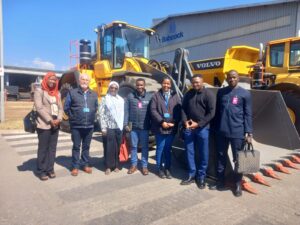
During a recent benchmarking visit by Senegal’s Bureau de Mise à Niveau (BMN), NCPC-SA selected Babcock as a demonstration site for successful RECP implementation, reinforcing the value of the partnership.
Key to success
Kea Tlhapane emphasises the importance of collaboration: “Resource efficiency challenges cut across systems, processes and behaviours. Collective effort is essential if we want sustained impact. NCPC-SA’s support, together with our SHE teams and operational leaders, has been central to the progress we have made.”
Govender adds: “Executive commitment was strong from the outset. Each business unit received the necessary support to move forward with implementation. ESG is not a compliance exercise for us – it is a strategic lever for long-term value creation.”