In any type of business, the importance of a due diligence (DD) cannot be stressed enough. Inadequate DD can lead to disastrous consequences. These can range from financial losses to legal complications.
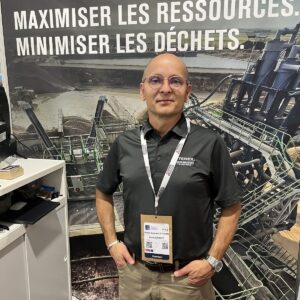
Speaking at the recent joint Institute of Quarrying Southern Africa (IQSA) and ASPASA October Symposium, Lynn Jones, principal environmental management consultant at Umhlaba Environmental Consulting, highlighted the importance of Environmental DD for existing operations, the benefits and the various phases of the process.
What is Environmental DD?
A due diligence is an evaluation/assessment undertaken by a party before making a decision, usually a financially related decision. In a private capacity, Jones explains, one would undertake a DD before making a big financial decision, such as buying a house, buying a car, changing jobs, or even getting married (depending on your culture, there is a lot of money involved in marriage).
An Environmental DD follows a similar concept: it includes an evaluation of all the necessary information to identify what environmental risks are associated with the operation/mine that may have an impact on the continued existence of the operation/mine.
“In the context of an aggregate and sand mine, an Environmental DD would consider the interactions between the mining activities and the environment. We would evaluate the activities taking place on-site, the resources that are necessary for continued operation, the state/validity of the environmental authorisations, and the environmental receptors impacted upon or influenced by the mine (both on-site and off-site),” explains Jones.
A comprehensive Environmental DD, she adds, will consider the presence of the authorisations, the content of the authorisations, and the implementation requirements of the authorisations, to understand if environmental risks have been identified, and also the cost of managing these risks for the duration of the operation.

Why Environmental DD?
An Environmental DD, says Jones, is necessary for existing operations as it is very likely that there are risks at the mine that may threaten the continued existence of the operation, and often the mine operators and/or mining right-holders are not aware of these. These risks may be unidentified/unknown because of changes in environmental legislation; the poor quality of Environmental Management Programmes (EMPr); the mediocre competence of the ‘competent’ authority (it must be noted that this statement is not applicable to all officials, but is unfortunately applicable to more officials than is desirable for effective implementation of robust legislation); and the use of corporate window dressing that glosses over the real environmental risks.
“Environmental DD for existing operations is really about money – it is about spending some money to know what the environmental risks are, so one can avoid spending even larger sums of money mitigating the impacts of unexpected risks, or paying the fine after legal prosecutions, or implementing unnecessary conditions of authorisations,” says Jones.
The concept of doing a DD for an existing operation, she stresses, is part of good planning. One needs to know where things can go wrong and take steps to avoid the challenges down the line.
Facets and phases
Environmental DD would essentially be identifying the sensitivities of the environment in which the mine operates, the risks where activities rely on finite resources, and determining the spatial extent of the long-term plans for the site in order to determine whether there is overlap with environmental sensitivities (remembering that there are buffers to these sensitivities).
The phases of an Environmental DD include:
Phase 1: Desktop Assessment
Start by using the information that is available online – this information is made available by the National Departments as they want to avoid transgressions and damage to the environment. Hence, they are making it easier for stakeholders to do screening assessments to identify where ground truthing is needed and what specialist input will be required.
The ‘desktop assessment’ is necessary to guide the next phases and allows for budget planning of the next phases.
Phase 2: Site Verification Planning
Once the theoretical risks are known, these can be considered in the context of mining activities and future plans. Where there are obvious clashes, the mine can draw up a plan of action for site verification (specialist studies). “It is necessary to partner with qualified specialists and obtain confirmation / input as to where detailed assessments are required, or where the desktop assessment provides enough information,” says Jones.
The benefit of Site Verification Planning is the discussion of the scope of work with the specialists before they are appointed. The specialists need to know the context of the studies, i.e. what the outcomes will be used for so that they can provide constructive input.
Phase 3: In-depth Assessments/Specialist Studies
Based on the outcomes of the Site Verification Planning, the specialist studies can be commissioned, using the scope of work identified. During this phase, it is necessary to ensure that the outcomes can actually be used by the mine. If not, then the scope of work has not been met.
Key benefits
The key benefit of the Environmental DD process is to save money in the long term by avoiding the manifestation of environmental risks. The risks that Jones refers to are those that could stop operations, such as running out of water, flooding of the pit/mining area, damage to infrastructure (or loss of life) due to flooding, or environmental prosecutions as a result of legal transgressions.
An additional benefit – one that is more important to Jones than saving money for a client – is the protection of resources. All of the environmental resources are finite, and the world cannot live without them.
“We may value material possessions, but the reality is that we can survive without them, but we cannot survive without arable land to grow crops and raise livestock. Clean water to drink and to grow our food is an absolute essential, and our health will deteriorate if we do not have clean air to breathe. It is also important to remember that we can live in many places but crops and livestock require arable land (not just soil),” she explains.

Success story
Over the years, Jones has worked closely with clients across the mining value chain. One of the flagship success stories during this time is that of an aggregate mine that undertook a floodline delineation for a site where the aggregate plant is located on the banks of a river. The site has been operational since the 1960s and the catchment up-stream of the site has been developed through urban expansion. This has resulted in a change in the stormwater inflows to the water course (river), increasing the flood volumes during storm events.
“The floodline delineation identified that the part of the workshop that included the ‘oil stores’ would be below the 1:50 year floodline. In a flood event, there was the risk of the release of hydrocarbons into the water course. As a result of this study, the mine has relocated the oil stores outside of the floodline and has also relocated any waste storage receptacles that were previously located below the floodline,” says Jones.
Subsequent to this delineation, the plant has twice been inundated by floodwaters. Had the oil stores not been relocated, the mine would have been liable for the downstream clean-up operation of hydrocarbon contamination.
Missed opportunities
Jones also cites a summary of the examples of where Environmental DD should have been undertaken (as advised):
Ground Water Investigations: A dolomite mine did not follow advice and did not undertake a ground water investigation to determine if there were any cavities in the vicinity or if they could intersect a geological feature that would result in flooding of the pit.
Result: A few years later, the mine was flooded by ground water. The mine spent a lot of money trying to pump the water out before they acknowledged this was a futile exercise and went from having a life span of over 100 years to running the risk of having to close because the pit was flooded.
“A proactive Environmental DD would have helped them plan, either identifying where mining could take place without flooding the pit or, calculating the actual cost of mining – allowing them to plan for the management of the ground water. An Environmental DD would have been a long-term cost saving,” says Jones.
Wetlands: There are many examples where mines have not delineated the wetlands before doing resource calculations. The life of mine is then calculated or the mine is purchased assuming all sand is available for mining. As members of the public are now more knowledgeable and the Department of Water and Sanitation (DWS) is more active than it used to be, mines are now being instructed to delineate the wetlands where desktop assessments have identified the potential for wetlands.
Result: The available resources are decreased as land is sterilised by wetland habitat and the buffers required to allow for the continued functioning of the wetlands. An Environmental DD would have identified the true resource availability and allow for more accurate life of mine predictions and/or sale values to be calculated.
The examples that follow relate to environmental resources that need to be understood and managed. But there is also a link between operational activities and environmental risks which can put the operational activities at risk.
Water Sources/Volume of Water Use: Most aggregate mines abstract water from the pit for use in the plant, but many are unaware of how much water they need for operations (it is estimated, but not measured), and how much flows into the pit annually.
There are also mines that utilise borehole water and where management is equally unaware of the volumes of water required, as well as being unaware of the capacity of the ground water resource. Advice to undertake the necessary pump tests and ground water investigations are typically met with resistance, often stating that “the pit has/the boreholes have never run dry before”.
Result: There are cases where mines have had to shut down because they have run out of water (due to insufficient Environmental DD regarding water supply).
In other cases when boreholes run dry, they simply sink another borehole to continue operations. These unplanned changes and use of a resource that has not been quantified by appropriately skilled personnel put the operation at risk in the long-term.
“The saying, ‘necessity is the mother of invention’ is true also in the context of aggregate and sand mining, and necessity is the mother of ‘n boer maak ‘n plan’, but we must not forget the cousin; ‘assumption is the mother of all disasters’,” warns Jones.
Ground water supplies, she adds, are not infinite/endless/limitless, and the unmanaged abstraction may have off-site implications that the mining industry will have to compensate for when the time comes. Abstraction from the pit and/or a borehole creates a drawdown cone, and the shape and special extent of this cone will depend on the volume of abstraction and the rate of recharge. If abstraction exceeds recharge, the mine will be depleting a ground water supply that feeds river and other ground water users, such as farmers.
Result: There is an ongoing case where the mine may have to compensate a farmer as he can no longer irrigate his crops. Better planning and an Environmental DD relating to operational needs versus available resources, could have avoided this scenario.
Managing process: Where the quality of the resource changes, there may be impacts on the processing and waste management. The quality of the sand at a sand mine changed and this had an impact on the output from the washing plant. Despite advice that investigations were necessary to change the sediment management system, the site made no changes and after a few years the settlement dams filled up and overflowed to a wetland and clogged the ‘clean water dam’.
Result: The mine is now abstracting water from a nearby river, which essentially is unnecessary use of resources. In addition, the spill into the wetland was reported by a concerned citizen and the mine has received a directive from DWS. The mine now has no time to approach this problem in a timely manner and is having to do a lot of work in a short space of time, having just spent R500 000 on engineering feasibility (that does not yet include the design).
“The lack of Environmental DD and long-term planning is having a big financial impact on this sand mine. The cost of the engineering work is only part of the expense, as they are also likely to be instructed to clean up and rehabilitate the wetland,” says Jones.

Competence matters
When undertaking an Environmental DD, stresses Jones, it is important to partner with competent and knowledgeable professionals who understand aggregate and sand mining, and not to look for the cheapest options. Operations should conduct some background research on the professionals they are considering appointing.
“Make sure the specialists are SACNASP- (South African Council of Natural Scientific Professions) registered in the relevant field. Ask for examples of similar work (although they may not always be able to share this information). If you do not have in-house personnel who have enough knowledge to filter out the’ fly-by-nights,’ or personnel with the time to manage this process, partner with a consultant to guide you and review the specialist work once drafted,” concludes Jones.