With a focus on building a resilient mining sector in a volatile global economy, the 2026 Joburg Mining Indaba taking place on 7 and 8 October 2026 in Sandton – will be looking for practical ways of converting its substantial mineral potential into sustained mining investment.
As geopolitical volatility continues to reshape global mining investment flows, the extent to which South Africa can improve its standing in international mining investment rankings will be a key theme running through the conference.
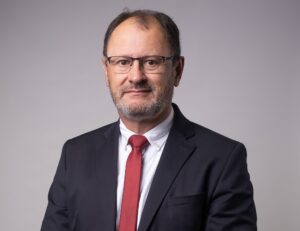
According to Andrew van Zyl, MD of SRK Consulting (South Africa), this journey will rely heavily on gains in regulatory certainty, infrastructure development and stronger collaboration across the mining value chain. South Africa is competing for capital against other mining jurisdictions elsewhere in the world, and must offer investors a compelling reason to choose it.
“South Africa’s mining future is not limited by its mineral resources,” says van Zyl. “What is less certain is whether we will continue to improve the conditions that allow this potential to be converted into investment – especially with the current volatility in market conditions, commodity prices and mineral supply chains.”
Pathway to success
He highlights that – with an attractive orebody as the starting point for an investment decision – investors increasingly require a credible pathway from exploration and resource definition through the stages of permitting, construction, production and closure.
This places a premium on predictable and transparent regulatory processes. While developments such as the Draft Mineral Resources Development Bill, the Critical Minerals Strategy and improvements to the mining cadastre are encouraging, Van Zyl says that implementation will ultimately determine their impact.
“For investors, policy intent matters less than what happens in practice,” he says. “Licensing and permitting need to be predictable and streamlined. Uncertain or unnecessarily protracted processes will raise the risk attached to projects – and therefore deter capital.”
Future of infrastructure
Infrastructure is another critical component of the investment proposition – with rail, ports, electricity and water services directly influencing the competitiveness of mining projects. In recent years, greater public-private collaboration has already contributed to improvements in logistics and export performance. He cautions, however, that infrastructure planning must look beyond current constraints.
“New mines take up to a decade to develop, and investors can only plan ahead confidently when appropriate infrastructure is in place,” he notes.
The cost and security of energy supply are also becoming increasingly important to project economics. While mines can harness renewable power generation and battery storage technologies to boost their resilience, these solutions must be matched to the operational requirements of individual mines. Decarbonisation and emissions reduction are increasingly part of this equation too, as South African mining companies work to align with the decarbonisation goals of key clients and countries.
“At the same time, mining has opportunities to improve safety, productivity and cost performance by responsibly deploying advances in technology,” he says.
Water stewardship will likewise require greater attention as climate variability and extreme weather place additional demands on storage, tailings infrastructure and operational planning.
Integrating expertise
South Africa’s established technical expertise provides another important competitive advantage, he points out.
“The country has deep capabilities across geology, resource estimation, geotechnical engineering, mining, metallurgy, water, tailings and environmental and social disciplines,” he says. “These disciplines all need to be integrated early enough to influence project design in ways that enhance sustainability and mitigate risk.”
Sustainability, he adds, has become a business imperative rather than a compliance requirement. “Strong environmental performance, meaningful community partnerships and robust ESG credentials remain central to a project’s ability to access capital,” says Van Zyl.
The global appetite for critical minerals – to spur the transition to cleaner energy – offers further opportunity to the mining sector, as governments and companies seek to diversify supply chains linked to the energy transition. He notes, however, that increasing global supply can also place downward pressure on prices, making capital allocation more complex for capital-intensive projects with long development timelines.
Skills for the future
None of this will be possible without the people to deliver it, says Van Zyl. South Africa’s mining sector needs to attract and develop the next generation of technical and operational skills, including drawing more young people and women into the industry, while retaining the experienced professionals whose expertise remains critical to project delivery.
“South Africa has a wealth of skills and experience but we cannot take for granted that the pipeline will continue to deliver this expertise,” he says. “Automation and AI can supplement our skills and make mining more attractive for young people – but it may also limit opportunities for young people to gain the experience they need to replace our seasoned engineers and scientists. As an industry, we need to jointly protect this pipeline, to ensure our sustainability.”
Realistic economics
He notes that, while many of these projects are strategically important, they also need to be commercially realistic.
“This will be possible through the right investment, sufficient infrastructure, appropriate offtake arrangements and well planned technical execution,” he says.
Ultimately, collaboration will be central to South Africa’s next phase of mining development, says Van Zyl. Government, mining companies, investors, infrastructure providers, educational institutions and communities each have a role to play in creating an environment in which technically sound, responsible projects can progress and where the required skills and experience is available.
“If we can combine regulatory certainty with infrastructure improvement, exploration with technical excellence, critical minerals opportunity with commercial discipline, and responsible mining with meaningful collaboration, South Africa can enter a new phase of sustainable mining investment,” he concludes.